

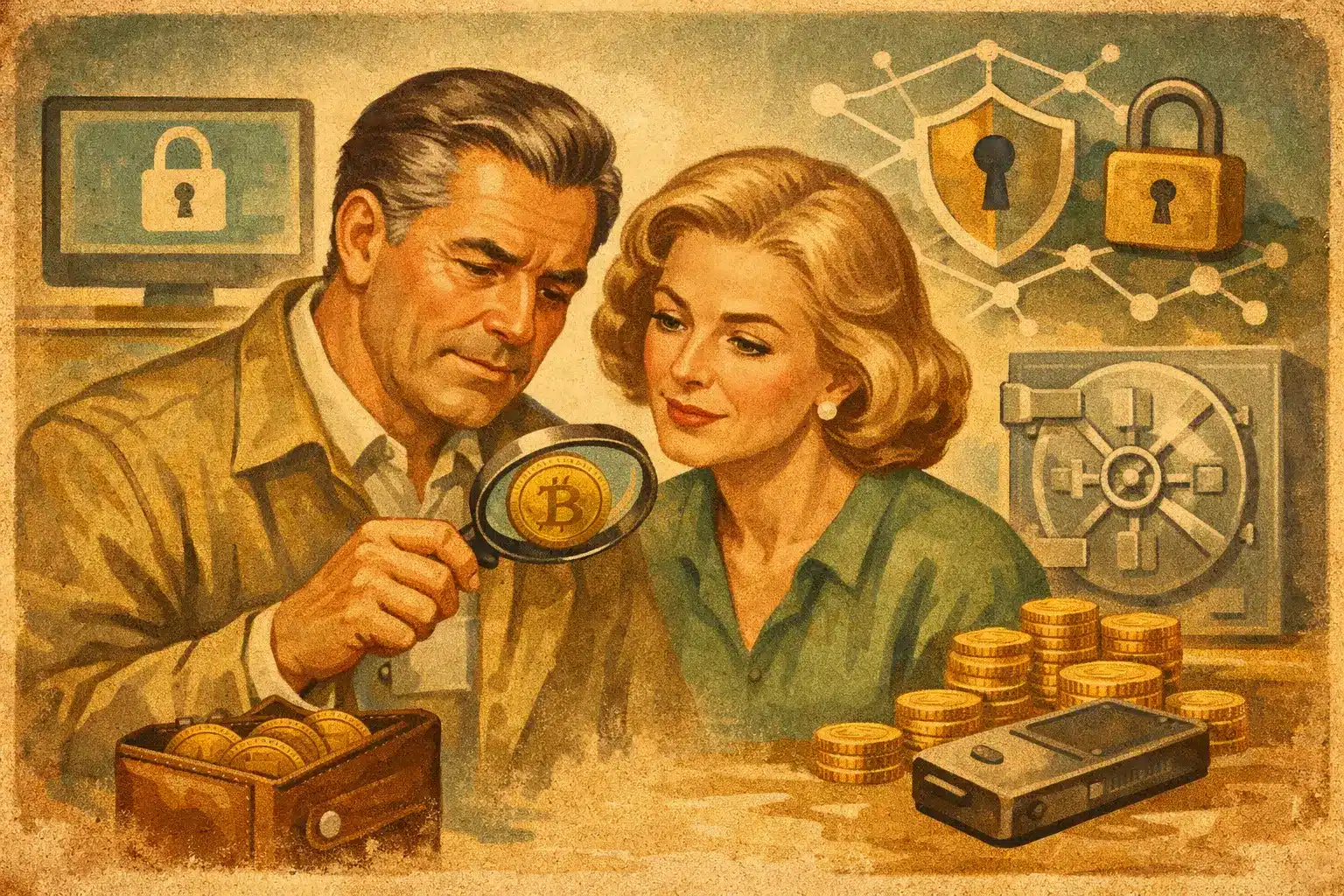
A message arrives saying your crypto account is locked and you must act now. The logo looks right. The wording sounds official. This is exactly how many people lose money – not because they are careless, but because scammers are skilled at creating panic.
That is why a crypto safety guide adults can actually use matters so much, especially if you are new to digital assets and want to move carefully. Crypto can be useful to learn about, but it comes with responsibilities that banks usually handle for you. If you make a mistake, there may be no customer service desk to put it right.
Why crypto safety matters more than excitement
Most beginners are taught the wrong thing first. They hear about price rises, lucky timing and dramatic headlines. What they should learn first is how to stay safe.
With crypto, safety is not an extra feature. It is part of ownership. If you hold your own Bitcoin or other digital assets, you are partly acting as your own bank. That can be empowering, but it also means you need a calm routine for passwords, devices, wallet access and scam awareness.
For adults over 45, there is often a sensible instinct to slow down and check things properly. That is a strength, not a weakness. The people who tend to get into trouble are often those who rush, click quickly, trust strangers or believe promises of easy returns.
The first rule in any crypto safety guide for adults
If someone contacts you first about crypto, be cautious.
That includes messages on WhatsApp, Facebook, Telegram, Instagram, email and even phone calls. A scammer may pretend to be from an exchange, a broker, a tax office, a celebrity investment group or a new friend who wants to help. The story changes, but the pressure is often the same. They want you to act before you think.
A genuine service will not ask for your password, your recovery phrase or urgent payment to release funds. If anyone asks for your 12 or 24 word recovery phrase, it is a scam. No exceptions.
This single point is worth repeating because it causes so many losses. Your recovery phrase is the master key to your wallet. Anyone who has it can take your crypto. You should never type it into a website, send it in a message or read it out over the phone.
If you are still learning the basics, it helps to build your understanding before you put money in. A simple place to begin is the Free First Lesson at https://simplylearncrypto.com/free-lesson/ which explains things in plain English without the usual noise.
Use only a small amount while learning
One of the safest habits for beginners is to start tiny.
You do not need to make a big purchase to learn how wallets, exchanges and transfers work. In fact, using a small amount is often the wisest route. It gives you room to make minor mistakes without serious consequences.
Think of your first steps as training, not investing. Learn how to log in securely, how to recognise the correct website, how to send a test amount and how to confirm that a transaction arrived where it should. Once that process feels familiar, you can decide whether to do more.
This slower approach may seem dull compared with online hype, but dull is often safe. In crypto, boring habits protect money.
Choose your wallet and exchange carefully
Not every platform deserves your trust.
A well-known exchange with a long track record will generally feel safer than a random site recommended in a social media comment. Even then, safety is not absolute. Exchanges can be hacked, accounts can be targeted and users can still be tricked. That is why many people eventually learn the difference between keeping crypto on an exchange and moving it to a wallet they control.
For complete beginners, the best choice depends on confidence level. Leaving a small amount on a reputable exchange may feel simpler at first. Using your own wallet can offer more control, but it also brings more responsibility. Neither option is perfect for everyone.
If you use a wallet, take your time setting it up. Write down your recovery phrase clearly on paper and store it somewhere private and secure. Do not keep it in your notes app, email drafts or photo gallery. If your phone is compromised, those digital shortcuts can become expensive.
Devices, passwords and everyday habits
A good crypto safety guide for adults should talk about ordinary digital hygiene, because that is where protection often starts.
Use a strong, unique password for every crypto-related account. If remembering many passwords feels unrealistic, a password manager may help, though some people prefer a written system stored safely offline. What matters most is that you do not reuse the same password across different accounts.
Turn on two-factor authentication where possible, ideally using an authenticator app rather than text message codes. SMS can be better than nothing, but it is generally less secure.
Also keep your phone, tablet and computer updated. Software updates can feel annoying, but they often fix security weaknesses. Avoid public Wi-Fi for crypto activity, and be wary of using shared devices. A quiet habit of checking website addresses carefully can also save you from fake login pages that look almost identical to the real thing.
The scams most beginners actually face
Many people imagine crypto theft as something highly technical. In reality, a large number of losses come from simple deception.
Fake giveaways are common. Someone claims that if you send a small amount of crypto, you will receive double back. You will not.
Romance and friendship scams are also common, especially on social media. A friendly connection grows, then somehow the conversation turns to a special investment opportunity. If emotion enters the picture, clear judgement often leaves.
Then there are fake investment dashboards. You may be shown impressive profits on a polished website, but the numbers are fiction. Everything looks fine until you try to withdraw. Suddenly there is a tax fee, a verification charge or an account release payment. Those extra charges are simply part of the scam.
A useful rule is this: if returns sound unusually steady, unusually high or strangely easy, step back. Real investing involves uncertainty. Anyone who removes all doubt with confident promises is usually selling a fantasy.
How to make safer transfers
Sending crypto is one area where small checks make a big difference.
Before transferring a meaningful amount, send a test amount first. Confirm that it arrives. Check the wallet address character by character, especially the first and last few characters. Some malicious software can copy one address and paste a different one without you noticing.
Take care with network selection as well. Sending funds on the wrong network can lead to loss or complications. If you are unsure, pause and ask for help from a trusted educational source, not from a stranger in a comment section.
This is where a simple written checklist can help. Many adults find that having a repeatable routine reduces stress and prevents rushed decisions.
Safety also means emotional control
Crypto safety is not only about technology. It is also about behaviour.
Fear of missing out leads people into poor decisions. So does embarrassment. If you are unsure how something works, there is no shame in slowing down and learning properly. In fact, that is one of the safest moves you can make.
Try not to make decisions late at night, under pressure or after reading dramatic market posts. If a purchase or transfer cannot wait until tomorrow, it probably deserves extra scrutiny today.
A calm learner usually lasts longer than an excited beginner. That matters far more than trying to be early.
If you want a gentler explanation of Bitcoin and the basic moving parts around wallets and ownership, you can download your Free Bitcoin Guide at https://simplylearncrypto.com/free-guide/. It is often easier to stay safe when the language itself is clear.
When to ask for help
There is a difference between support and dependence.
Good support helps you understand what you are doing. Bad support tries to take control of your account, device or decision-making. Be careful with anyone who insists you screen-share, install remote access software or hand over details because they will “sort it for you”.
If you want help, choose education over rescue. Choose someone who explains the process and leaves you more capable, not more reliant.
That approach is especially valuable for retirees and pre-retirees who are thinking about long-term holding, legacy and careful record-keeping. Safety is not just about today. It is also about whether your future self – or your family – could make sense of what you set up.
Keep a simple record of what you hold, where it is held and what trusted person should know in an emergency. You do not need to share private keys or recovery phrases casually, but you do need a thoughtful plan.
If you’d like to take the next gentle step, you can start with your Free First Lesson here: https://simplylearncrypto.com/free-lesson/
This article is shared for entertainment and educational purposes only. It is not financial advice. Crypto investments involve risk, and past performance is not a guide to future results. Always do your own research or speak to a qualified financial adviser before making any investment decisions.
