

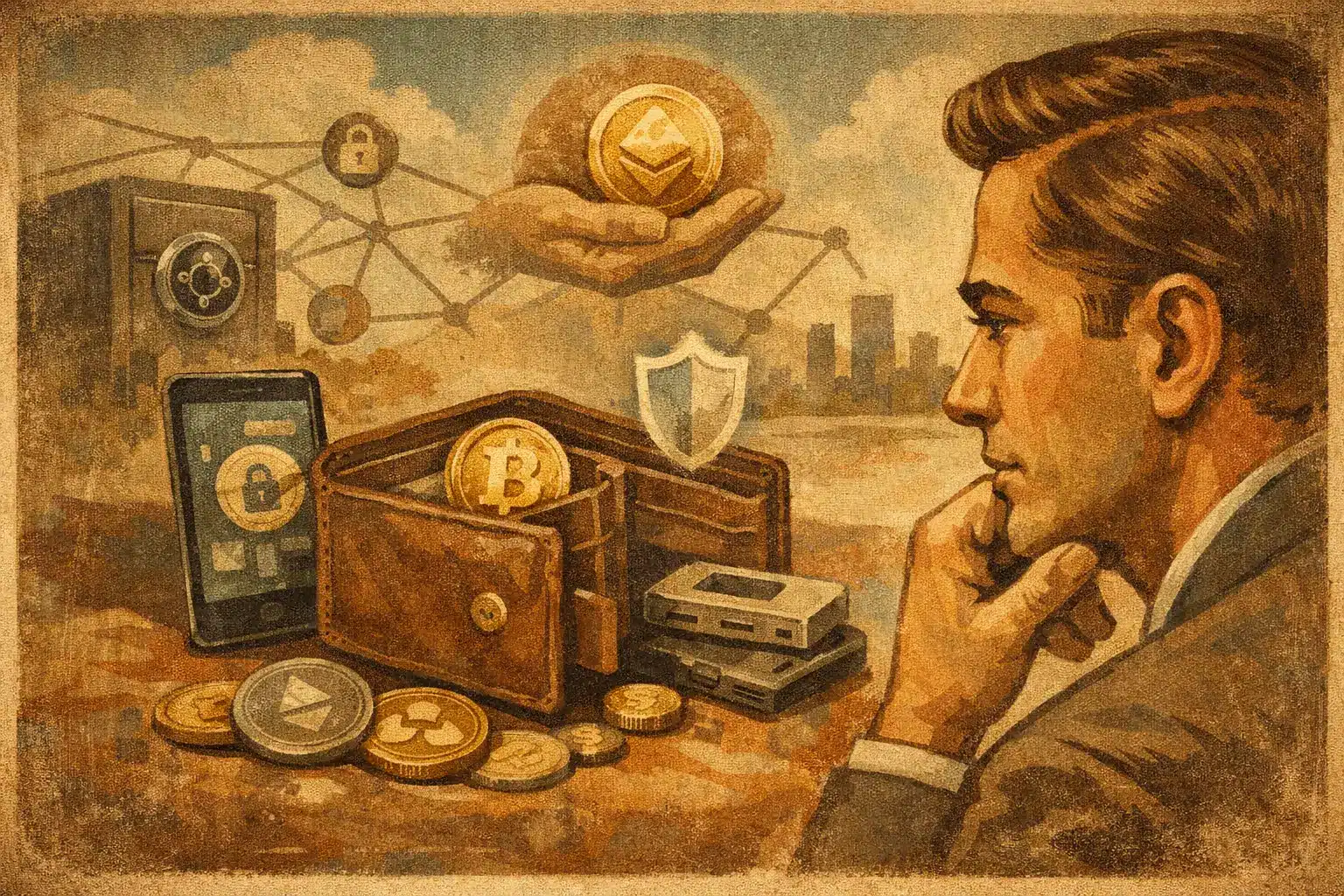
If you have just bought a small amount of Bitcoin on an exchange, you may be wondering: do I need a crypto wallet, or can I just leave it where it is? That is one of the most sensible questions a beginner can ask, because the answer affects your safety, your confidence, and how much responsibility you want to take on.
The short answer is this: yes, if you want proper control over your crypto, you will usually need a crypto wallet. But not everyone needs one straight away, and not every wallet is right for every person. That is where a bit of calm explanation helps.
Do I need a crypto wallet if I use an exchange?
When you buy crypto on an exchange, the exchange often holds it for you. This can feel easier at first because there is no extra setup, no recovery phrase to store, and fewer steps to learn. For many beginners, that simplicity is reassuring.
The downside is that you are trusting a company to look after your assets. In plain English, if your coins stay on an exchange, you do not have full control. You are relying on that platform to remain secure, solvent, and accessible. If your account is frozen, if the platform is hacked, or if you simply struggle to log in years later, you may face stress at exactly the wrong time.
That is why many long-term holders eventually move their crypto into a wallet they control themselves. It reduces dependence on a third party. It also comes with more responsibility, because if you lose your wallet recovery phrase, there is usually no helpline that can restore access.
So the real answer is not just yes or no. It depends on how much crypto you hold, how long you plan to keep it, and whether you are ready to manage the security side yourself.
What a crypto wallet actually does
A crypto wallet does not store your coins in the same way a leather wallet stores cash. Instead, it stores the keys that let you access and move your crypto on the blockchain. Think of it as the tool that proves ownership.
This is where beginners often get put off, because the language sounds technical. It helps to keep it simple. A wallet is your access tool. The most important part is the private key or recovery phrase. That is the information that gives control over your holdings.
If you would like a gentler explanation of the basics before worrying about wallet types, you can start with the Free First Lesson. It is designed for beginners who want plain English rather than tech talk.
When you probably do need a crypto wallet
If you are buying crypto for the long term, a wallet usually makes sense. This is especially true if you see Bitcoin or other digital assets as part of a wider plan around wealth preservation, retirement planning, or passing assets on to family one day.
A wallet also becomes more important as the amount you hold grows. Someone with a tiny test amount may decide to keep it on a well-known exchange while learning. Someone holding a more meaningful sum often wants the added control of self-custody.
You may also need a wallet if you want to use crypto beyond simply buying and holding. Some people want to send funds to family, receive payments, or access certain blockchain-based services. In those cases, a wallet is often essential.
There is also a peace-of-mind factor. Many people over 45 are not interested in fast trading. They want to buy carefully, store safely, and check in occasionally rather than constantly. A properly set up wallet can support that calmer approach.
When you might not need one yet
You might not need a crypto wallet immediately if you are still in the learning stage and only hold a very small amount. In that case, adding another piece of technology too early can create more confusion than confidence.
There is no prize for rushing. If setting up a wallet today would leave you anxious about making a mistake, it may be wiser to first understand how exchanges work, what recovery phrases are, and what scams to avoid.
This is especially true for people who are not naturally comfortable with apps, passwords, and backup procedures. A wallet can be very safe, but only if you can use it correctly. For some beginners, waiting a little while is the safer decision.
The trade-off: convenience versus control
This is really what the question comes down to. Exchanges offer convenience. Wallets offer control.
Convenience means easier buying, simpler access, and fewer setup steps. Control means you hold the keys yourself and are not relying entirely on someone else. Neither side is perfect.
If you leave funds on an exchange, you face platform risk. If you move funds to your own wallet, you face personal responsibility risk. That includes losing your backup phrase, sending to the wrong address, or falling for a fake wallet app.
For many sensible beginners, the best path is gradual. Start small. Learn the basics. Then move to a wallet once you understand what you are doing and why you are doing it.
Which type of wallet is best for beginners?
There are two main categories most beginners hear about: software wallets and hardware wallets.
A software wallet is an app on your phone or computer. It is often easier to start with and can be suitable for smaller amounts. The trade-off is that internet-connected devices can be more exposed to online threats if your device is not well protected.
A hardware wallet is a physical device designed to keep your keys offline. Many people prefer this for long-term holdings, especially larger amounts. It can offer stronger security, but it also introduces more setup steps and more room for user error if you are rushed or confused.
For a complete beginner, the best wallet is rarely the one with the longest feature list. It is the one you can understand, set up properly, and manage without panic. Simple is often safer.
Safety matters more than speed
Most crypto mistakes happen when people move too quickly. They are worried about missing out, so they skip the boring parts – writing down the recovery phrase carefully, checking a wallet address twice, or confirming they are using the genuine app or device.
If you decide to use a wallet, take your time. Never share your recovery phrase. Never store it casually in an email draft or screenshot folder. Never trust someone who offers to help by asking for remote access to your device.
Scammers often target beginners by creating urgency. A legitimate wallet provider will never need your recovery phrase. Once that phrase is exposed, your crypto can be stolen in moments.
If you want a simple foundation before making any wallet decisions, you can download your Free Bitcoin Guide. It helps explain the moving parts in a way that feels manageable rather than overwhelming.
A good question to ask yourself first
Rather than asking only, do I need a crypto wallet, try asking: what am I trying to do with crypto?
If your aim is to experiment with a very small amount and learn how buying works, you may not need one yet. If your aim is to hold for years, protect your purchasing power, and take responsibility for your own assets, a wallet becomes far more relevant.
If your aim is to leave something organised for a spouse or children, then wallet choice also needs to include a plan for inheritance and clear instructions. This part is often missed, but it matters greatly for older investors. Security is not just about keeping strangers out. It is also about making sure the right people can access your assets if something happens to you.
So, do I need a crypto wallet?
For many people, yes – eventually. If you plan to own crypto for the long term, a wallet is usually the sensible next step because it gives you more control. But that does not mean you should rush into setting one up before you understand the basics.
The best approach is steady and practical. Learn first. Use small amounts. Choose simplicity over cleverness. And only take on the responsibility of a wallet when you feel ready to manage it safely.
If you would like to take the next gentle step, you can start with your Free First Lesson here: https://simplylearncrypto.com/free-lesson/
This article is shared for entertainment and educational purposes only. It is not financial advice. Crypto investments involve risk, and past performance is not a guide to future results. Always do your own research or speak to a qualified financial advisor before making any investment decisions.
