

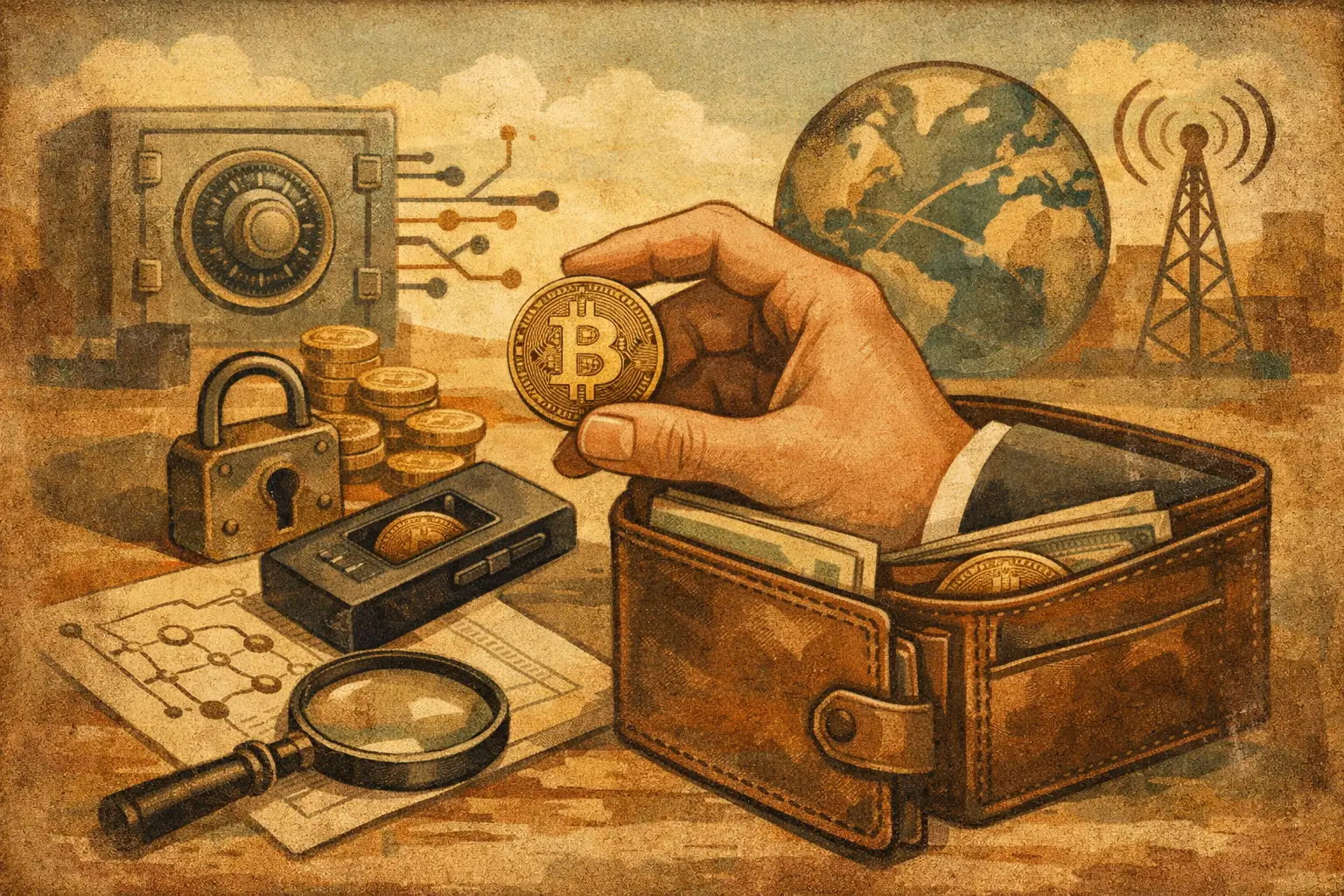
If the word wallet makes you think of something in your pocket, Bitcoin can feel oddly confusing at first. That is exactly why so many beginners ask how to understand bitcoin wallets before they buy anything at all. It is a sensible question, because a wallet is less like a leather billfold and more like the key to your digital money.
The first thing to know is that a Bitcoin wallet does not really “hold” your Bitcoin in the way a purse holds cash. Your Bitcoin lives on the blockchain, which is a public record of ownership. The wallet holds the keys that let you access and move that Bitcoin. Once that clicks, a lot of the confusion starts to ease.
How to understand bitcoin wallets in simple terms
A good way to picture a Bitcoin wallet is to think of online banking, but with one major difference. With a bank account, the bank controls access and can help if something goes wrong. With Bitcoin, your wallet gives you control directly. That is powerful, but it also means responsibility matters more.
Every wallet is built around two things: a public address and a private key. Your public address is a bit like an account number. You can share it with someone who wants to send you Bitcoin. Your private key is more like your secret signature. It proves that you are the rightful owner and allows you to send Bitcoin out.
Most modern wallets hide the technical details and give you a cleaner experience. You may simply see a balance, a send button, a receive button, and a recovery phrase. That recovery phrase is extremely important. It is usually a set of 12 or 24 words that can restore your wallet if your phone, tablet, or computer is lost, damaged, or replaced.
If you are still at the early stage of learning, it can help to start with your Free First Lesson: https://simplylearncrypto.com/free-lesson/. It explains the basics in plain English and can make topics like wallets feel much less intimidating.
What a wallet really does
When you open a Bitcoin wallet, it creates or manages the keys linked to your Bitcoin. It also lets you check your balance on the blockchain and approve transactions. In practice, that means three simple jobs: receiving Bitcoin, storing access to it, and sending it when you choose.
This is where many beginners get tripped up. They assume the app itself is the Bitcoin. It is not. The wallet is the tool that helps you interact with the blockchain. If you lose access to the wallet but still have your recovery phrase, you can usually restore everything. If you lose both the wallet and the recovery phrase, your Bitcoin may be gone for good.
That may sound harsh, but it is also why many people like Bitcoin. You are not relying entirely on a bank, company, or third party. The trade-off is that safety habits matter more.
The main types of Bitcoin wallet
When learning how to understand bitcoin wallets, it helps to know there is no single perfect choice for everyone. The right wallet depends on how much Bitcoin you own, how often you use it, and how comfortable you are with technology.
Hot wallets
A hot wallet is connected to the internet. This might be a mobile app, desktop app, or browser-based wallet. Hot wallets are convenient and easy to use, especially for beginners. They are often the fastest way to get started.
The downside is that internet-connected tools are generally more exposed to cyber risks than offline ones. That does not mean every hot wallet is unsafe. It just means they are better suited to smaller amounts or day-to-day use rather than large long-term holdings.
Cold wallets
A cold wallet stores your keys offline. In many cases, this means a hardware wallet, which is a small physical device designed for secure storage. These are often considered safer for larger amounts because they are less exposed to online threats.
The trade-off is convenience. Cold wallets take a bit more setup and can feel less straightforward at first. For someone planning to hold Bitcoin for years rather than trade regularly, that extra step can be worthwhile.
Custodial wallets
With a custodial wallet, another company holds the keys on your behalf. This is common on exchanges. It can feel easier because the platform manages much of the security and login process.
But there is a catch. If someone else controls the keys, you do not have full control of the Bitcoin. That is why you may hear the phrase, “not your keys, not your coins”. For beginners, custodial wallets can be a stepping stone, but they are not the same as true self-custody.
Non-custodial wallets
A non-custodial wallet gives you control of your own private keys and recovery phrase. This is the model many Bitcoin supporters prefer because it puts ownership firmly in your hands.
The obvious trade-off is responsibility. If you mishandle your recovery phrase, there may be no customer support team that can restore access for you.
How to choose the right wallet for your situation
For many adults over 45, the best wallet is not the one with the most features. It is the one you can use calmly, understand clearly, and protect properly.
If you are buying a small amount just to learn, a simple mobile wallet may be enough. If you are thinking in terms of long-term wealth preservation or legacy planning, a hardware wallet may make more sense. If you want maximum simplicity while learning, you may begin with a custodial solution, then move to self-custody once you feel ready.
This is one of those areas where “it depends” is the honest answer. Ease of use matters. So does security. One person may prefer full control right away, while another may need a slower, more guided approach.
If you would like a calmer explanation of the foundations before choosing tools, you can download your Free Bitcoin Guide here: https://simplylearncrypto.com/free-guide/.
The biggest safety point most beginners miss
The most important part of wallet safety is not usually the app itself. It is how you handle your recovery phrase.
If anyone gets hold of that phrase, they may be able to access your Bitcoin. If you store it as a photo on your phone, in an email draft, or on a computer file, you are taking a risk. Many people choose to write it down carefully and store it somewhere private and secure. Some use more than one written copy in separate safe places.
Just as important, never share your phrase with anyone claiming to be support staff. No legitimate wallet provider needs it. Scammers often rely on panic, urgency, or confusion. A calm rule helps here: if someone asks for your recovery phrase, stop immediately.
Common wallet misunderstandings
A lot of fear around Bitcoin wallets comes from a few simple misunderstandings. One is thinking that all wallets are basically the same. They are not. Some are built for convenience, some for stronger security, and some for both to a degree.
Another misunderstanding is believing that exchanges and wallets are identical. They overlap, but they are not the same thing. An exchange is a place where you can buy or sell. A wallet is where your access is managed. Sometimes one company offers both, which can blur the difference.
There is also a tendency to think you must understand every technical detail before you begin. You do not. You only need to understand the basics well enough to use a wallet safely and confidently. That is a much more realistic starting point.
A simple way to think about it
If you want the shortest explanation of how to understand bitcoin wallets, use this one. A Bitcoin wallet is a tool that manages the keys to your Bitcoin. Your public address is for receiving. Your private key and recovery phrase are for control and access. The more control you want, the more responsibility you take on.
That is why learning slowly is not a weakness. It is actually the sensible route. Bitcoin rewards calm, careful habits far more than speed.
If you would like to take the next gentle step, you can start with your Free First Lesson here: https://simplylearncrypto.com/free-lesson/.
This article is shared for entertainment and educational purposes only. It is not financial advice. Crypto investments involve risk, and past performance is not a guide to future results. Always do your own research or speak to a qualified financial advisor before making any investment decisions.
