

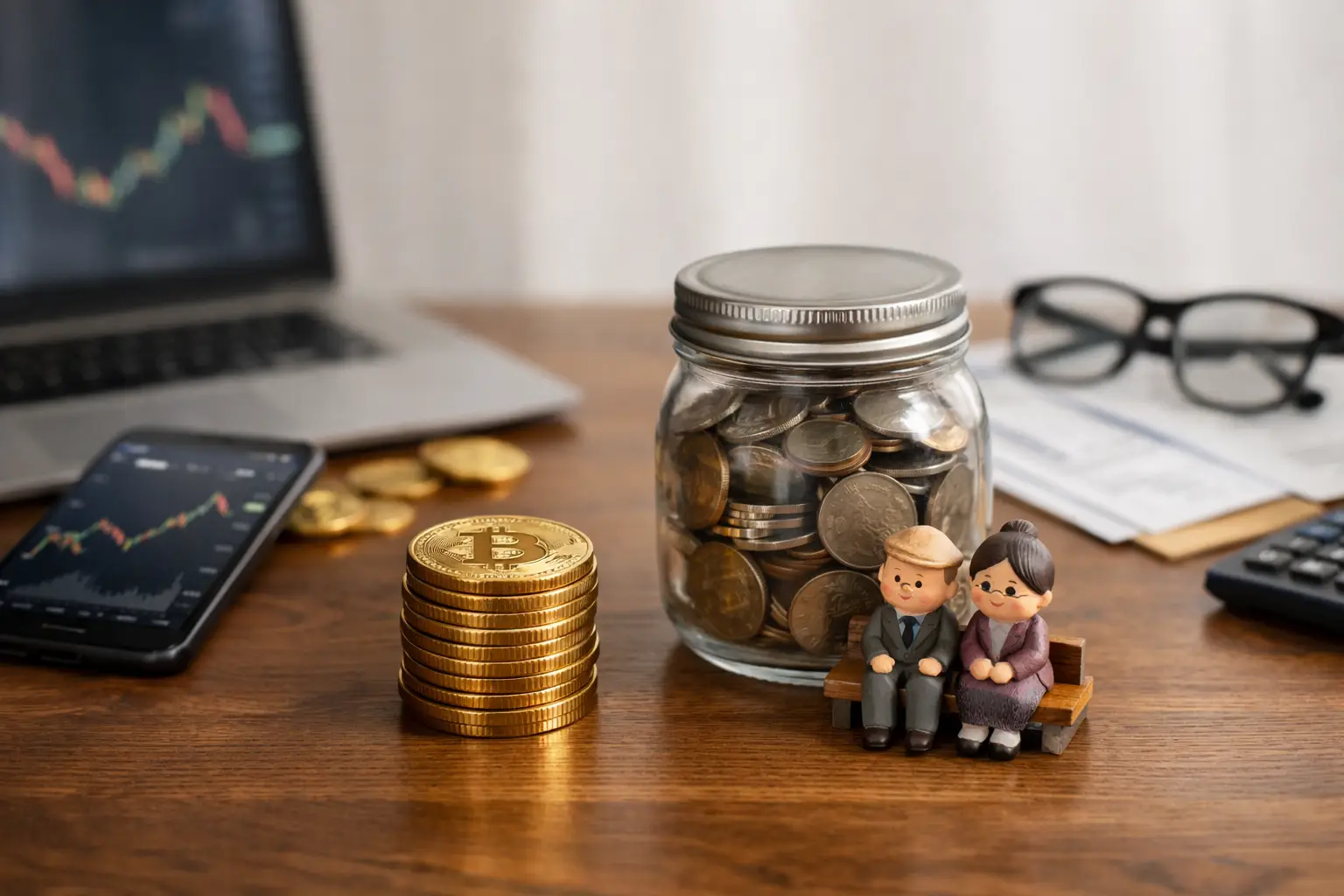
A pension statement can feel reassuring because it is familiar. Bitcoin can feel compelling because it appears to offer an escape from inflation and the limits of traditional money. But bitcoin savings versus pension contributions is not a simple choice between old and new. They are built for different jobs, carry different risks, and deserve to be considered calmly rather than as an all-or-nothing decision.
For anyone over 45, the question is often less about chasing the highest possible return. It is about protecting future choices: when to stop work, how to support a partner, what to leave to family, and how to avoid a financial shock ruining a carefully made plan.
Bitcoin savings versus pension contributions: the key difference
A pension is usually a long-term retirement arrangement. Money paid in may receive tax advantages, depending on where you live and your circumstances. If you are employed, your employer may also contribute. That employer contribution is a valuable part of your pay package, not a bonus to overlook lightly.
Bitcoin is a digital asset that you can buy and hold yourself. It is not a pension, does not provide an employer contribution, and does not automatically give you tax relief. Its attraction is different: it has a fixed maximum supply, can be held directly, and is not controlled by a bank or pension provider. It may have a place in a wider plan for some people, but it comes with sharp price movements and no guarantees.
The useful comparison is therefore not, “Which one will win?” It is, “What purpose should each serve in my financial life?” A pension may be designed to provide retirement income. Bitcoin, if you choose to own it, may be a small long-term holding with the potential for growth and the risk of substantial falls.
Do not give up guaranteed value for uncertainty
Before considering Bitcoin, check whether you are receiving every pension contribution available to you. In many workplace schemes, reducing your own contribution can mean losing an employer contribution too. That is an immediate, known benefit which is difficult for any investment to match reliably.
Tax treatment matters as well. In the UK, pension contributions can receive tax relief within the rules and allowances that apply to you. Pension withdrawals and Bitcoin gains can each have tax consequences, so it is sensible to speak with a qualified adviser or tax professional before making changes. The details differ across Europe, and they can change over time.
This does not mean Bitcoin has no role. It means it should not casually replace benefits you already have. A person who has built a sound pension base, has manageable debts, keeps cash for emergencies and understands Bitcoin’s risks is in a very different position from someone considering stopping pension payments to buy crypto after seeing a dramatic price rise.
Access to your money changes the decision
Pensions are deliberately less accessible. Usually, you cannot draw on them until you reach the relevant minimum pension age, apart from limited exceptions. That restriction can be frustrating, but it also protects retirement money from being spent too early or used to react to market headlines.
Bitcoin can be sold or transferred at any time, provided you can access it safely. Flexibility is one reason people are interested in it. Yet easy access can also lead to poor decisions. Selling after a sudden fall, buying more after a sudden rise, or keeping too much on an exchange because it feels convenient can all create avoidable problems.
There is another practical difference. A pension provider handles much of the administration. With self-custodied Bitcoin, you are responsible for your wallet, recovery phrase and security. That control can be empowering, but it is a responsibility. If a recovery phrase is lost or shared with a scammer, there may be no customer service team able to restore the funds.
For beginners, learning the safety basics before buying is more valuable than rushing to open an account. Understanding what a wallet is, why a recovery phrase must stay private, and how common scams work can remove much of the anxiety. A free beginner Bitcoin lesson can be a sensible first step before committing any money.
Risk is not only about price
Bitcoin is known for volatility. Its price can rise or fall significantly in a matter of days, weeks or months. Even people who believe in its long-term potential must be prepared for uncomfortable periods where the value of their holding is much lower than the amount invested.
Pensions have risks too. Their investments can fall, inflation can reduce spending power, charges can matter, and income in retirement may not be as high as hoped. However, pensions are commonly diversified across shares, bonds and other assets, depending on the fund. They are not typically tied to the success of one asset.
The greatest danger is putting money into Bitcoin that you may need soon. If you are close to retirement, planning to buy a home, or helping a child through university, you may not have time to wait through a prolonged downturn. Bitcoin is generally better considered with money you can afford to leave untouched for years and potentially see fall sharply in value.
A helpful question is this: if Bitcoin fell by 50% after you bought it, would you feel pressured to sell? If the honest answer is yes, the amount may be too large for your circumstances.
A balanced approach may suit some people
For many pre-retirees, the more measured route is not replacing pension contributions with Bitcoin. It is keeping the pension plan on track while deciding whether a small, clearly limited Bitcoin allocation fits their wider finances and comfort with risk.
The size of that allocation is personal. It depends on your pension position, emergency savings, debts, income, health, family commitments and emotional ability to tolerate volatility. Someone with a secure pension and years before retirement may see the decision differently from someone who has little retirement provision or expects to draw on savings soon.
If you do decide to buy Bitcoin, avoid treating it like a daily trading activity. A long-term approach is usually calmer: choose an amount, buy gradually if that helps you manage nerves, and keep records. Do not borrow to invest. Do not use a credit card. Do not act because a social-media post claims that a price surge is guaranteed.
Most importantly, separate learning from investing. You can spend time understanding Bitcoin without spending money on it. Simply Learn Crypto is built around this principle: clear explanations, practical safety and no need to pretend you understand technical language on day one.
Think about your family and legacy
Retirement planning is rarely only about one person. If you have a spouse or partner, they should know where important financial information is kept. Bitcoin adds an extra layer because access can depend on private information that must never be written into a will or handed casually to another person.
A sensible legacy plan explains that Bitcoin exists, where the secure access instructions are held, and who should be contacted for help. It should not expose recovery words or passwords. Pensions also need attention: check beneficiaries and expression-of-wish forms, especially after marriage, divorce, bereavement or changes in family circumstances.
This is not gloomy administration. It is a practical kindness to the people you care about.
Make the next decision a small one
You do not need to solve your entire retirement strategy this week. Start by reviewing your pension contributions, particularly any employer contribution you may be missing. Then look at your emergency savings and near-term plans. Only after that should you consider whether Bitcoin belongs in a carefully controlled part of your longer-term savings.
The goal is calm confidence, not perfect prediction. A pension can provide structure and valuable tax or employer benefits. Bitcoin can offer a different kind of long-term exposure, alongside real volatility and personal security responsibilities. Understanding both gives you more control over the choices ahead.
If you would like to take a gentle next step, begin with a free Bitcoin lesson and focus first on the basics of safe ownership, rather than rushing into a purchase.
This article is shared for entertainment and educational purposes only. It is not financial advice. Crypto investments involve risk, and past performance is not a guide to future results. Always do your own research or speak to a qualified financial adviser before making any investment decisions.
