

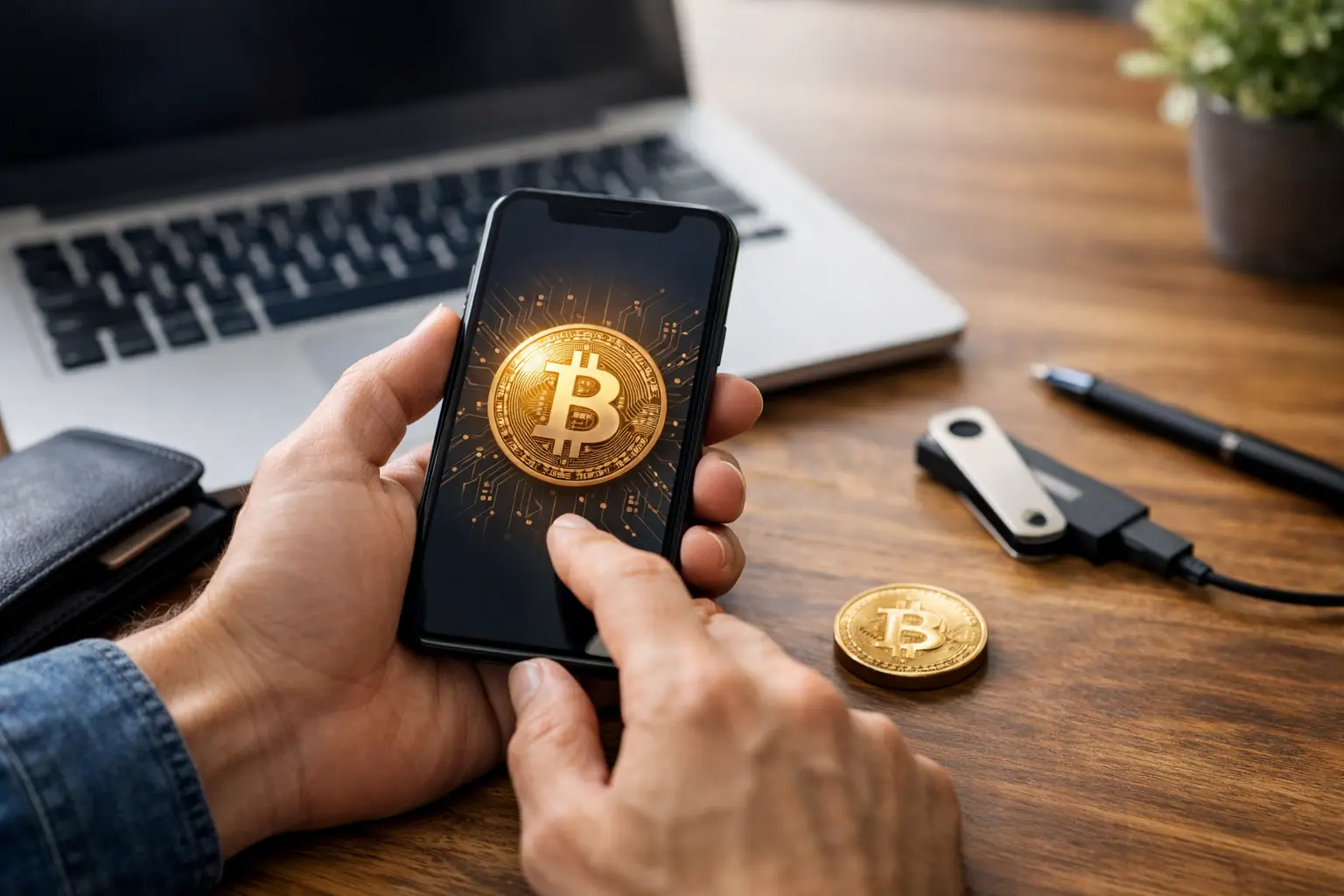
A Bitcoin wallet is one of those things that sounds more technical than it is. To set up your first Bitcoin wallet, you do not need to understand computer code, trading charts, or complicated financial jargon. You need to make a few calm, careful choices – especially around security – before you buy or receive any Bitcoin.
The most useful way to think about a wallet is not as a physical purse holding coins. Your Bitcoin exists on the Bitcoin network. Your wallet holds the private keys that prove the Bitcoin is yours and allow you to move it. Those keys are powerful, which is why setting up a wallet properly matters far more than doing it quickly.
What a Bitcoin wallet actually does
Your wallet gives you two important things: a public Bitcoin address and a private recovery phrase. A public address is similar to an account number. You can share it with someone who wants to send you Bitcoin. It is usually a long string of letters and numbers, although wallets often display it as a QR code too.
Your recovery phrase, sometimes called a seed phrase, is entirely different. It is normally a list of 12 or 24 ordinary words generated when you create the wallet. Anyone with those words can restore your wallet and take control of the Bitcoin inside it. Treat it as seriously as the keys to your home, your safe, and your bank account combined.
A reputable wallet provider will never ask you to send them your recovery phrase. Neither will a genuine support team. If somebody asks for it, whether by email, text message, phone call, or a convincing-looking website, assume it is a scam.
Choose the right type of wallet first
The right wallet depends on how much Bitcoin you plan to hold, how often you expect to use it, and how comfortable you are with managing your own security. There is no single perfect choice for everyone.
A software wallet is an app on your mobile phone or computer. It is generally the easiest place for a beginner to start, particularly if you are buying a modest amount and want to learn how receiving and sending works. Good software wallets are convenient, but your mobile phone or computer is connected to the internet, so you need strong device security.
A hardware wallet is a small dedicated device that keeps your private keys offline. It is usually a better choice for a larger amount that you intend to hold for years rather than spend. It costs money and adds a little more responsibility, but many long-term holders value the added separation from their everyday mobile phone or laptop.
Some people begin with a software wallet and move to a hardware wallet once they feel more confident or their Bitcoin holding becomes meaningful to them. That is a sensible progression. You do not have to buy every tool on day one.
A third option is leaving Bitcoin on the platform where you bought it. This can be convenient, but it means the platform controls the wallet keys rather than you. It may be suitable for a very small amount while you are learning, but it is worth understanding the trade-off. If you want direct control of your Bitcoin, you will eventually need a self-custody wallet, meaning a wallet where you control the recovery phrase.
How to set up your first Bitcoin wallet step by step
Start by choosing a well-established wallet from the official app store or the manufacturer’s official source. Be particularly cautious with sponsored adverts in search engines and social media. Scammers regularly create copies of real wallet websites and apps, hoping people will enter their recovery phrase.
Before downloading anything, check the spelling of the company name, read recent independent reviews, and make sure the app has a credible history. Do not use a wallet simply because a stranger in a social media group recommended it.
Once you open your chosen wallet, select the option to create a new wallet. The app may ask you to set a PIN, password, fingerprint, or face recognition. Use a PIN that is not easy to guess and make sure your mobile phone itself also has a proper screen lock.
The wallet will then show your recovery phrase. This is the moment to slow down. Write every word down in the exact order shown, using pen and paper. Check each word twice. Do not take a screenshot, store it in your notes app, photograph it, email it to yourself, or save it in cloud storage. Those methods may feel convenient, but they create extra ways for someone else to find it.
Keep the written phrase somewhere private, dry, and secure. A locked home safe may suit some people. Others prefer a secure place separate from their main paperwork, especially if they are concerned about fire, flooding, or theft. The best arrangement depends on your circumstances, but it should be known to nobody who does not absolutely need access.
Most wallets will ask you to confirm several words from the phrase. This can feel repetitive, but it is a useful safety check. It proves you have copied it correctly before you put any money into the wallet.
After this, your wallet will display a Bitcoin receiving address. You are ready to receive Bitcoin, but do not rush into sending a large amount.
Make a small test before moving meaningful money
When moving Bitcoin from an exchange or another wallet, begin with a small test transaction. Copy your receiving address directly from your wallet, rather than typing it by hand. Then check the first few and last few characters against the address shown in your wallet before you confirm the transfer.
Bitcoin transactions cannot usually be reversed. If you send funds to the wrong address, there may be no customer service department that can retrieve them. A small test gives you reassurance that you understand the process and that the address is correct.
Wait for the transaction to appear in your wallet. Depending on network activity and the fee selected, this can take from minutes to longer. Once the small amount has arrived, you can decide whether to move the rest. This slower approach is not overly cautious. It is good financial housekeeping.
Protect your wallet from the scams that catch beginners
Many Bitcoin losses do not happen because Bitcoin itself was hacked. They happen because someone was persuaded to reveal a recovery phrase, install remote-access software, or send funds to a fraudster.
Be especially wary of urgent messages. A scammer may claim your wallet is frozen, that you have won an investment opportunity, or that you must act immediately to protect your money. They rely on panic and embarrassment. A genuine wallet does not need your recovery phrase to provide support.
Never allow an unknown person to control your computer or mobile phone remotely. Be cautious with unsolicited WhatsApp, Telegram, Facebook, and email messages. And remember that a familiar profile photo or company logo proves very little, as both can be copied.
It is also wise to discuss your plan with a trusted family member or friend, particularly if you are thinking about holding Bitcoin as part of a long-term plan. They do not need your recovery phrase. However, they should understand that a wallet exists and know where to find clear instructions if something happens to you. This is part of sensible legacy planning, not something to leave until later.
Keep it simple enough to manage for years
The safest system is one you can follow confidently. Avoid creating several wallets, installing lots of unfamiliar apps, or chasing complicated features just because they are being discussed online. For a beginner focused on long-term holding, a secure wallet, a carefully stored recovery phrase, and a written record of your basic process are often enough.
Consider making a simple private note for yourself explaining where your wallet is held, what type it is, and what steps are needed to access it. Do not include the recovery phrase in that note. The aim is to reduce confusion in the future, especially if you do not use the wallet for months or years.
Setting up your first wallet is not a test of technical ability. It is a small act of taking responsibility, one careful step at a time. Give yourself permission to practise with a tiny amount, ask questions, and only proceed when the process feels clear.
This article is shared for entertainment and educational purposes only. It is not financial advice. Crypto investments involve risk, and past performance is not a guide to future results. Always do your own research or speak to a qualified financial advisor before making any investment decisions.
