

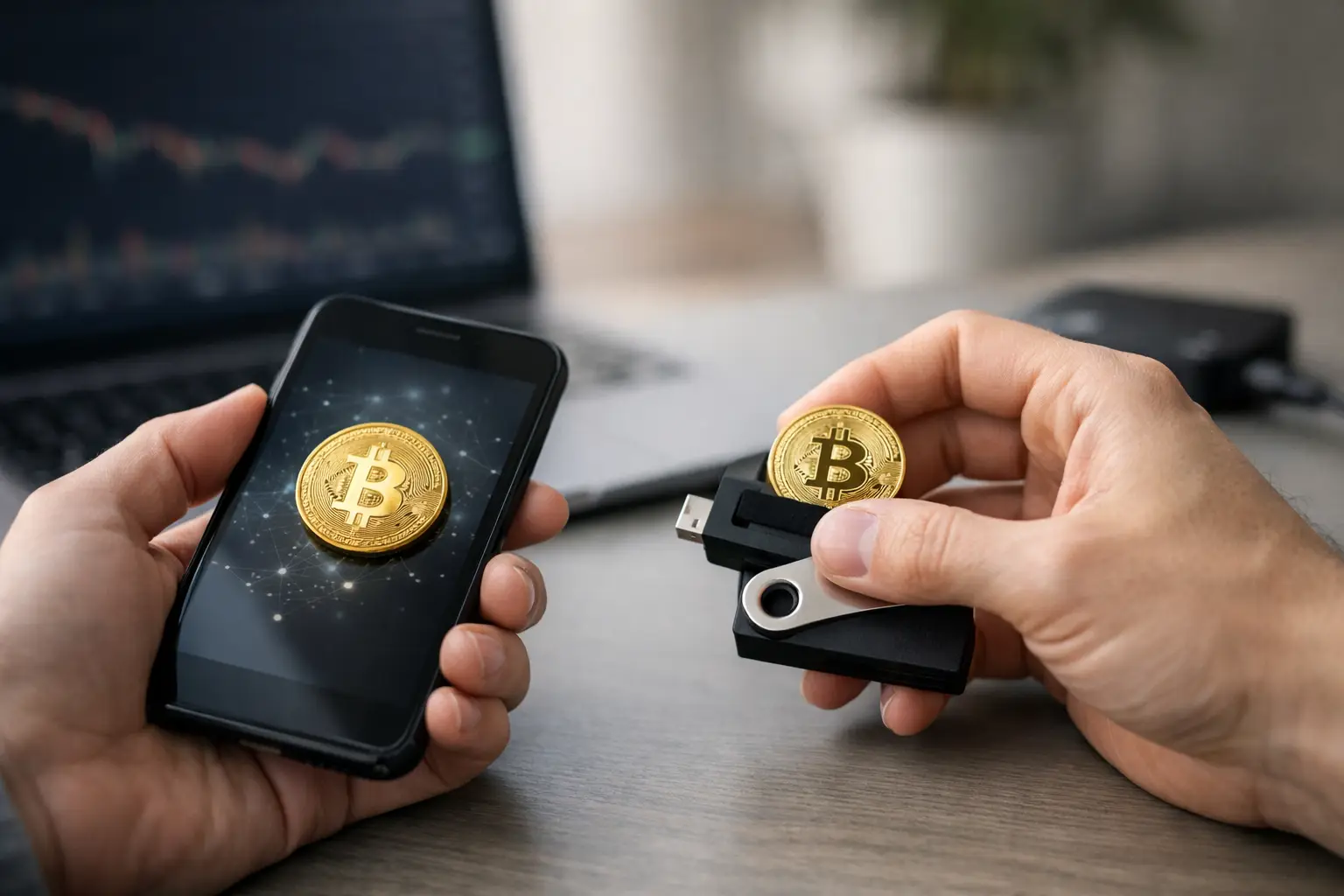
Leaving Bitcoin on an exchange can feel convenient, especially when you are new. But learning how to move bitcoin off exchange is one of the clearest ways to take personal responsibility for your holdings. It is not something to rush, and it is not necessary for every small amount. For Bitcoin you plan to hold for years, however, using your own wallet can reduce your reliance on an exchange being available, secure and able to process withdrawals when you need it.
The key is to understand what changes when you withdraw. You are not moving coins into a device in the ordinary sense. You are taking control of the private keys that allow Bitcoin to be spent. With that control comes more independence, but also more responsibility.
Why move Bitcoin off an exchange?
An exchange is a company that holds cryptocurrency on your behalf. When you buy Bitcoin there, the balance may appear in your account, but the exchange generally controls the wallet keys behind it. This is known as custodial storage.
For active buying and selling, keeping a modest amount on a reputable exchange may be practical. Yet an exchange can suffer technical problems, freeze an account while it carries out checks, face a cyberattack or, in rare cases, fail financially. Regulations and withdrawal rules can also change.
A personal wallet gives you a different arrangement. You hold the recovery information yourself, so you are not dependent on an exchange to approve a withdrawal later. People often describe this simply as: if you hold the keys, you control the Bitcoin.
That phrase should not be taken as a reason to withdraw everything immediately. Self-custody means there is no customer service team that can restore access if you loses your recovery phrase. The sensible choice depends on the amount involved, how long you expect to hold it and whether you are willing to learn a few essential safety habits.
Choose the right wallet before you withdraw
For a small amount of Bitcoin that you are learning with, a reputable mobile wallet may be enough. It is simple to use, but because it is connected to the internet, it needs careful phone security. Use a strong screen lock, keep your software updated and never store your recovery phrase in notes, photographs, email or cloud storage.
For a larger long-term holding, many people prefer a hardware wallet. This is a small physical device designed to keep the private keys offline. It normally requires you to approve transactions directly on the device, which adds useful protection if your computer or phone is compromised.
A hardware wallet is not magic, though. Its greatest protection can be undone if you give your recovery phrase to a scammer or type it into a fake website. Buy devices directly from the manufacturer or an authorised seller, never second-hand. A genuine wallet will never ask you to share your recovery phrase with support staff.
When setting up any self-custody wallet, you will be shown a recovery phrase, usually 12 or 24 words. Write the words down in the exact order. Keep them offline and out of sight. Consider where they would be safe from fire, water, theft and casual discovery, while still being accessible to you or an appropriately trusted person if something happens.
How to move Bitcoin off exchange step by step
The first transfer should be treated as a practice run. Fees and waiting times are normal parts of the Bitcoin network, so calm preparation is more valuable than speed.
- Set up your wallet carefully. Complete the setup process, write down the recovery phrase and confirm that you can read every word clearly. Do not begin a withdrawal until this is done.
- Find your Bitcoin receiving address. In your wallet, choose Bitcoin and then receive. You will see a long line of letters and numbers, often with a QR code. This is the address that tells the Bitcoin network where to send your funds.
- Copy the address and check it. Paste it into the withdrawal section of your exchange. Check the first and last several characters against the address shown in your wallet. This helps protect against copying mistakes and malicious software that can replace an address in your clipboard.
- Select the correct asset and network. Choose Bitcoin, usually shown as BTC, and use the standard Bitcoin network. Exchanges may display several network options. Do not choose an unfamiliar option simply because it appears cheaper. Sending via the wrong network can cause serious problems.
- Send a small test amount first. A small test may cost an extra withdrawal fee, but it buys reassurance. Wait until it appears in your wallet and confirm that the amount and address are correct. Only then should you send the remaining amount, if you decide to do so.
- Wait for confirmations. Bitcoin transfers are not instant. Your wallet may show the transaction as pending before it is confirmed. The time can vary with network activity and the exchange’s own withdrawal process. Avoid repeatedly clicking or trying to send again while you wait.
Once the Bitcoin arrives, your exchange balance will be lower and your wallet balance will show the amount received. Keep a simple record of the date, amount and wallet used. This can make future tax records and personal organisation easier.
The mistakes that cause the most stress
The most damaging mistakes are usually not technical. They come from acting under pressure. A fake support message, a convincing phone call or an urgent warning that your account is at risk can make anyone feel rushed.
No legitimate wallet company needs your recovery phrase to help you. No genuine exchange employee should ask you to send Bitcoin to a “safe” address. If someone asks for your 12 or 24 words, asks you to scan a QR code sent in a message, or pressures you to act immediately, stop the conversation.
It is also wise to avoid discussing the size of your Bitcoin holding publicly. Privacy is a security habit. The fewer people who know the details, the less likely you are to become a target for fraud or unwanted pressure.
Another common error is failing to plan for family members. If you are holding Bitcoin as part of long-term savings or a legacy for children and grandchildren, consider how someone you trust would know that the Bitcoin exists and where to find clear instructions. Do not put the recovery phrase in those instructions. Instead, explain where the recovery information is securely stored and who should be contacted for guidance if needed.
Should you move all your Bitcoin off an exchange?
There is no universal rule. If you are still learning, sending a small amount to a personal wallet can be a sensible way to build confidence without taking on too much responsibility at once. If you trade frequently, you may choose to keep a limited working balance on an exchange and store longer-term holdings separately.
Think of it as choosing where different belongings belong. You might keep a little cash in your wallet for everyday use, but not your entire savings. Likewise, an exchange can be useful for buying and selling, while self-custody can suit Bitcoin you do not intend to touch often.
Before moving a significant amount, take time to practise with a test transfer, learn what your recovery phrase does and make a written storage plan. Calm confidence comes from repetition, not from trying to memorise everything in one sitting.
Moving Bitcoin into your own wallet is less about making a dramatic gesture and more about building a steady habit of care. Take one small, checked step at a time, and only hold an amount you feel confident protecting.
This article is shared for entertainment and educational purposes only. It is not financial advice. Crypto investments involve risk, and past performance is not a guide to future results. Always do your own research or speak to a qualified financial advisor before making any investment decisions.
