

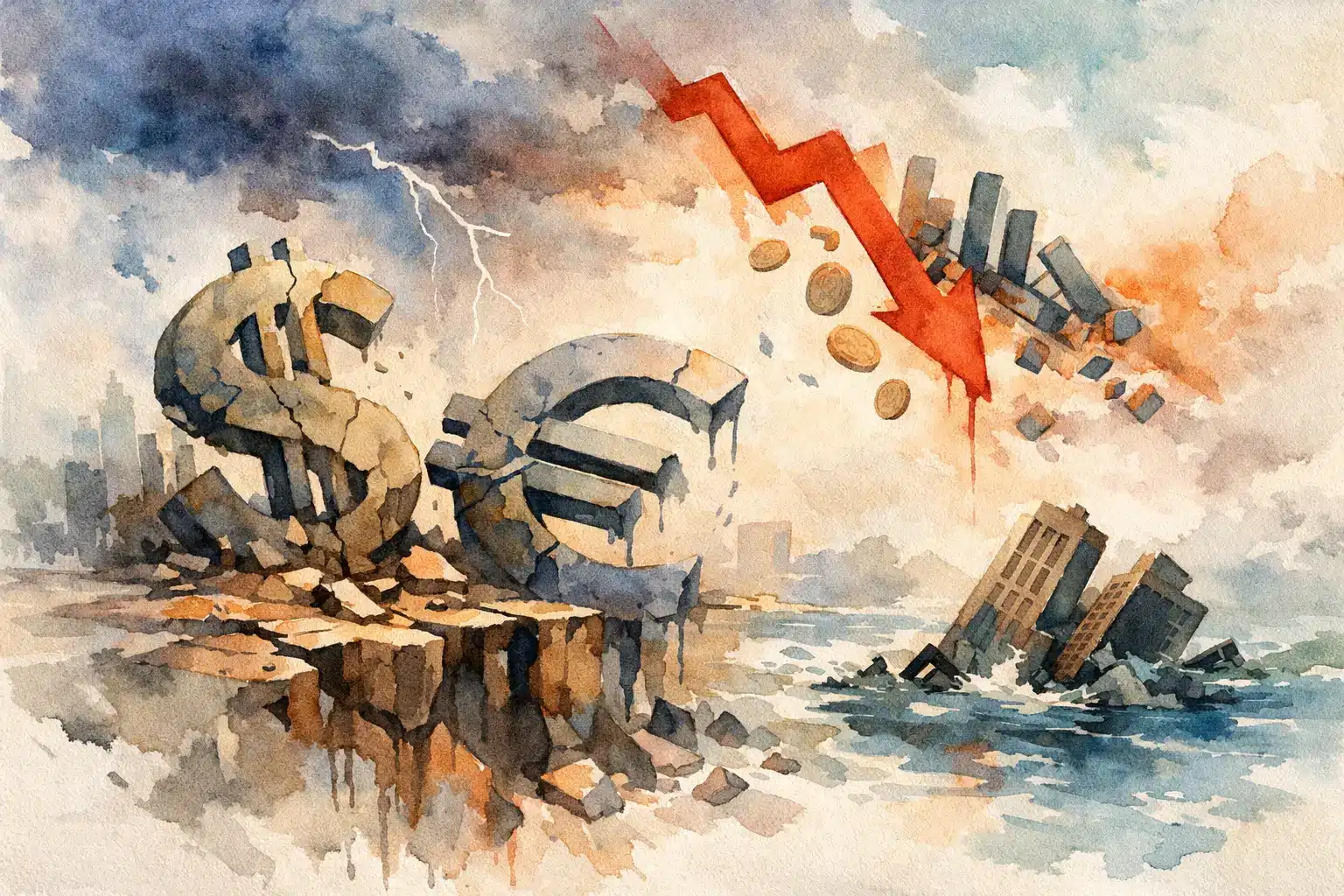
If you keep your crypto on an exchange and that company runs into trouble, the experience can be deeply unsettling. For many beginners, especially those thinking about retirement, the question what happens if exchange fails is really a question about control, access, and whether your money is still yours when you need it.
The uncomfortable truth is that it depends on how the exchange was operating, what country it falls under, and whether your coins were sitting there as a customer balance rather than in your own private wallet. In some cases, withdrawals are frozen for days or weeks. In worse cases, customer funds can become tangled up in a long legal process, and people may only recover part of what they had, or nothing at all.
What happens if exchange fails in real life?
A crypto exchange is a company that lets you buy, sell and hold digital assets. It can feel a bit like an online bank account, but it is not the same thing. If a bank fails, there are often well-established protections and compensation schemes. With crypto exchanges, those protections may be limited or absent.
When an exchange fails, several things can happen quite quickly. First, withdrawals may be paused. That means you can still see your balance on the screen, but you cannot move the coins out. Next, trading may stop, customer support may go quiet, and the company may announce restructuring, insolvency or administration.
At that point, your account becomes part of a much bigger process. Lawyers, administrators and courts may need to work out who owns what, where the assets are, and whether the exchange actually kept customer funds separate from company funds. That final part matters enormously.
If an exchange properly ring-fenced client assets, customers may have a better chance of getting them back. If it did not, or if there was fraud, poor record-keeping or excessive lending behind the scenes, recovery can be slow and uncertain.
Why your crypto may not be fully protected
Many people assume, quite reasonably, that if they bought Bitcoin or another coin through a large exchange, the assets are simply sitting there waiting for them. Sometimes that is true. Sometimes it is not.
Some exchanges act mainly as custodians. They hold the crypto on your behalf. That means you do not control the private keys, which are the secret credentials needed to move the coins. The old phrase in crypto is simple: not your keys, not your coins. It sounds blunt, but it captures the risk very well.
If the exchange fails while holding the keys, you are relying on that company and the legal system to restore access. You are no longer in direct control. For beginners, this is one of the most important concepts to understand early. If you want a calm, plain English explanation of the basics, start with the Free First Lesson: https://simplylearncrypto.com/free-lesson/
There is another issue as well. Some platforms do more than basic buying and selling. They may lend out customer assets, offer yield products, or use complicated company structures. The more moving parts there are, the harder it can be to untangle things if the business gets into trouble.
The difference between temporary problems and total collapse
Not every exchange problem means disaster. Sometimes a platform pauses withdrawals because of technical issues, maintenance, banking delays or sudden market stress. That can still be frustrating, but it is not the same as insolvency.
A temporary issue is usually resolved within hours or days, with communication from the company along the way. A more serious failure often comes with vague statements, repeated delays, rumours on social media, and a noticeable drop in trust. If a firm starts blaming “market conditions” without giving clear answers, that is a warning sign worth taking seriously.
The challenge for ordinary users is that from the outside, both situations can look similar at first. You log in, something is frozen, and you are told to wait. That is why prevention matters more than trying to guess whether a platform is healthy after the warning lights appear.
What you might lose if an exchange goes under
The most obvious risk is losing access to your coins. But there are other losses that matter too.
You may lose time, especially if your assets are tied up in a long claims process. You may lose flexibility, because you cannot sell, transfer or rebalance when you want to. You may also lose peace of mind, which is not a small thing if you are trying to build a careful long-term plan rather than trade every week.
There is also the possibility of partial recovery. In some exchange failures, customers eventually receive a percentage of their balance back, but not the full amount. In others, distributions happen in stages over several years. So when people ask what happens if exchange fails, the answer is not always a dramatic overnight loss. Sometimes it is a drawn-out process of uncertainty.
How to reduce the risk before anything goes wrong
The simplest way to reduce exchange risk is not to treat an exchange as long-term storage. Use it as a place to buy or sell, then move your crypto to a wallet you control if that suits your level of confidence and learning.
That does come with responsibility. Self-custody means you must protect your recovery phrase, avoid scams, and learn the steps properly. For some people, especially at the beginning, that feels intimidating. But the right education makes a huge difference, and it is usually less complicated than feared.
If you are still getting your bearings, download your Free Bitcoin Guide here: https://simplylearncrypto.com/free-guide/ It explains the foundations in straightforward language, without assuming any technical background.
It also helps to keep only the amount on an exchange that you actively need there. If you are making a purchase, fine. If you are storing long-term savings for months or years, think carefully about whether that platform is the right place.
Choosing a better-known exchange with a stronger reputation can lower risk, but it does not remove it. Large firms can still fail. Regulation, transparency and good security all help, but none of them are perfect guarantees.
Sensible warning signs to watch for
You do not need to become an expert detective, but there are a few signs worth paying attention to. If an exchange offers unusually high returns for simply depositing your crypto, caution is sensible. If its company structure is hard to understand, that is another yellow flag. If customer support is persistently poor, or if withdrawal complaints keep appearing, do not brush that aside.
It is also wise to be wary of keeping all your holdings in one place. Even people who prefer a simple setup can reduce risk by avoiding over-concentration. You do not need a complicated system. You just need to avoid unnecessary dependency on a single company.
What to do if you think an exchange is in trouble
Start by staying calm. Panic often leads to mistakes, especially in crypto. Log in through the official app or website, not through links in emails or social media posts. Scammers often exploit moments of fear by sending fake alerts.
If withdrawals are still open, consider moving your assets to a wallet you control or to a safer temporary option you understand. If the platform has already frozen withdrawals, gather your records. Save screenshots of balances, transaction history, emails and account details. If there is a claims process later, good records may help.
Most importantly, learn from the situation without blaming yourself too harshly. Many intelligent people have been caught out by exchange failures because the platforms looked polished and trustworthy until the very end.
A calmer way to think about exchange risk
Crypto does not have to mean chaos, but it does require a different mindset from ordinary banking. An exchange is useful, but it should not automatically be mistaken for a vault. The safest approach for beginners is to learn the difference between buying crypto and truly controlling it.
That one shift in understanding can protect you from one of the biggest risks in this space. If you would like to take the next gentle step, you can start with your Free First Lesson here: https://simplylearncrypto.com/free-lesson/
This article is shared for entertainment and educational purposes only. It is not financial advice. Crypto investments involve risk, and past performance is not a guide to future results. Always do your own research or speak to a qualified financial advisor before making any investment decisions.
