

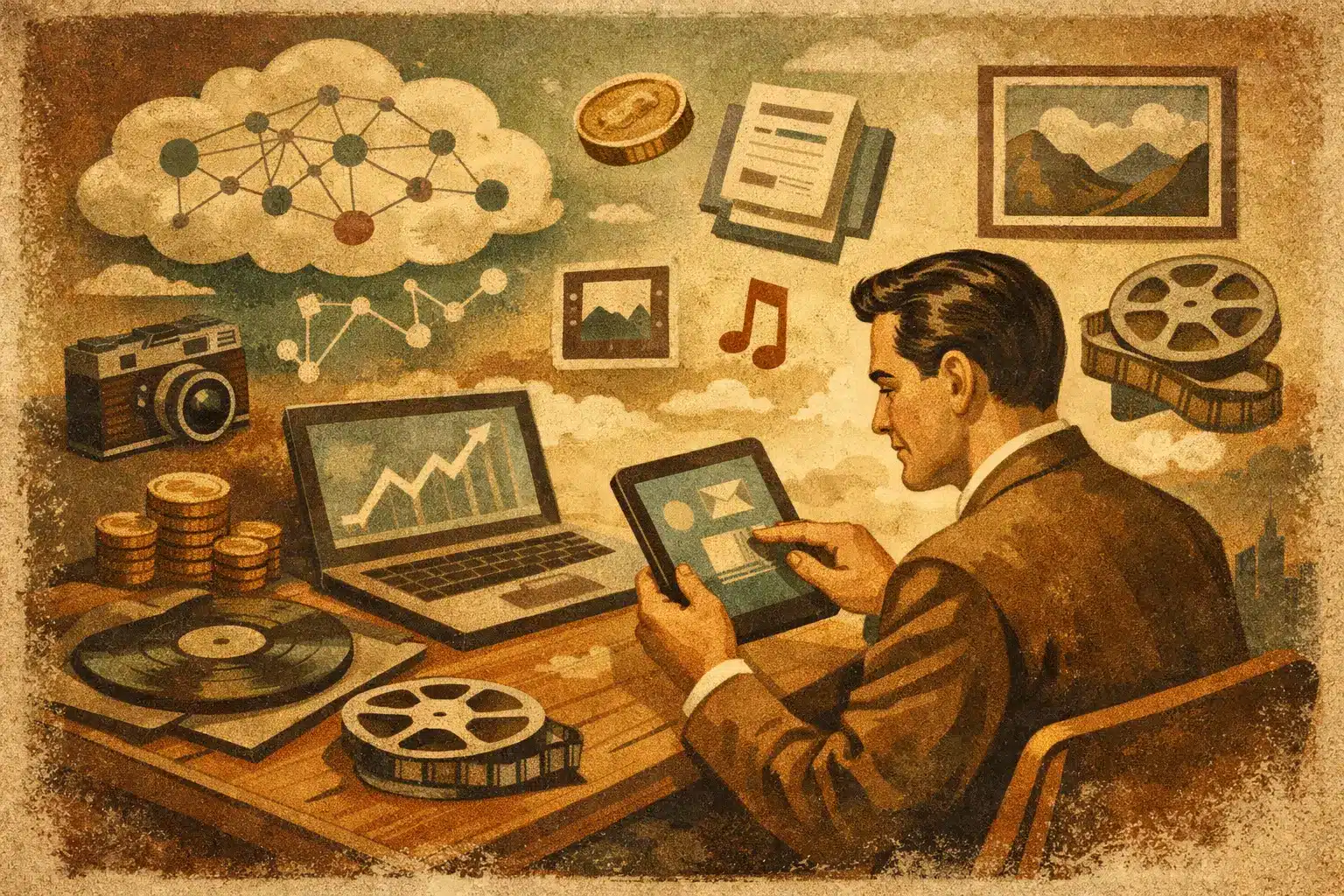
You do not need to be a computer expert to understand digital assets. In fact, if the phrase digital assets explained simply is what brought you here, the main thing to know is this: a digital asset is something you own in digital form that has value.
That value might come from money, usefulness, access, ownership, or proof. Some digital assets are familiar already, such as online photos, digital documents, or loyalty points. In the crypto world, the term usually refers to things like Bitcoin, other cryptocurrencies, digital tokens, and sometimes digital representations of real-world assets.
For many people over 45, the confusion starts because everything gets bundled together under one big, noisy label. Bitcoin, crypto, blockchain, NFTs, wallets, tokens – it can sound like a foreign language. It helps to slow it down and separate the idea of a digital asset from the technology behind it.
What digital assets means in simple terms
A digital asset is anything stored electronically that can be owned or controlled and has some kind of value. That is the broad definition.
In everyday life, your online banking balance is digital, but it sits inside the traditional banking system. A digital asset in the crypto sense is different because it can often be held directly by you, moved without a bank, and recorded on a blockchain. That is one reason people find it interesting. It offers a new way to store and transfer value.
Think of it like this. If a physical pound coin is money you can hold in your hand, a digital asset is value that exists electronically. You cannot put it in your pocket, but you may still own it, send it, receive it, or keep it for the long term.
Digital assets explained simply with real examples
Bitcoin is the best-known example. Many people see it as digital money or digital gold. It is not issued by one government or one company, and its supply is limited. That limited supply is one reason some people hold it as a long-term asset.
Other cryptocurrencies also count as digital assets, but they do not all do the same job. Some are designed for payments. Some power apps or services. Some represent ownership or voting rights inside a project. This is where things start to become more complex, and where beginners need to be careful not to assume all digital assets are equal.
Stablecoins are another type. These are digital assets designed to hold a steadier value, often linked to a currency such as the US dollar. People sometimes use them to move money more easily inside the crypto world, but they carry their own risks depending on how they are managed.
There are also tokenised assets. These are digital tokens that represent something else, such as shares in a fund, a piece of property, or another real-world asset. This area is growing, but it is still developing and comes with extra layers of complexity.
If you are very new to all this, it often helps to start with Bitcoin before looking at the wider market. If you want a calm introduction, you can start with the Free First Lesson at https://simplylearncrypto.com/free-lesson/.
Why people care about digital assets
For some, digital assets are about opportunity. For others, they are about protection. Those are not the same thing.
Some people buy digital assets because they hope the value will rise over time. Others are more interested in owning something outside the traditional financial system. If you are thinking about retirement, inflation, or passing wealth on to family, that second reason may matter more.
That said, there is no guarantee that any digital asset will protect your wealth. Prices can be volatile, rules can change, and poor decisions can be costly. The appeal is real, but so are the risks. A calm approach is far better than chasing excitement.
How ownership works
One of the biggest differences between digital assets and traditional assets is how ownership is managed.
With a bank account, the bank keeps records of what belongs to you. With many crypto-based digital assets, ownership is recorded on a blockchain, and access is controlled through a wallet. A wallet does not actually hold the asset in the way a leather wallet holds cash. It holds the keys that let you access and move your assets.
This is empowering, but it also brings responsibility. If you control your own wallet, you are taking charge of your own security. That means keeping recovery phrases safe, avoiding scams, and understanding what you are doing before you transfer anything.
For beginners, this is often the point where confidence drops. That is normal. The good news is that you do not need to learn everything at once. You just need to learn the right basics in the right order.
The role of blockchain
You do not need deep technical knowledge, but a simple picture helps. A blockchain is a shared digital record. Instead of one central organisation controlling it, many computers keep the record updated and checked.
That record can show who owns what, when something was sent, and whether a transaction is valid. This is what makes many digital assets possible. It is the system that tracks ownership without relying entirely on a bank or central authority.
This does not mean blockchains are magic or flawless. They can still involve fees, delays, user error, and security problems around the edges. The technology can be clever while the human side remains messy.
What digital assets are not
It helps to clear up a few common misunderstandings.
Digital assets are not all the same. Bitcoin is not the same as every other cryptocurrency. A well-established asset is not the same as a brand-new token promoted on social media.
They are not automatically safe because they use modern technology. Scammers are very active in this space, especially where beginners are involved.
They are also not a shortcut to easy wealth. Some people have done very well. Many others have bought the wrong thing, bought at the wrong time, or trusted the wrong person.
That is why plain-English education matters so much. Before putting any money into this area, it is worth taking time to understand the basics properly. You can also download your Free Bitcoin Guide at https://simplylearncrypto.com/free-guide/ if you want a steadier starting point.
How to approach digital assets sensibly
For most beginners, the first goal should not be making fast profits. It should be understanding what you are looking at.
Start by asking simple questions. What is this asset meant to do? Who uses it? Why does it have value? How is it stored? What are the risks if I get this wrong?
Then think about your own situation. Someone who is still working full time and has decades ahead may approach risk differently from someone near retirement. If preserving capital matters more to you than chasing growth, that should shape your decisions.
A sensible approach usually means starting small, focusing on quality over novelty, and never investing money you may need in the short term. It also means being wary of anyone promising certainty, guaranteed returns, or secret opportunities.
Digital assets explained simply for older beginners
If you are over 45 and feel late to the topic, you are not. You are simply coming to it with a different set of priorities.
You may care less about trends and more about safety. Less about trading and more about long-term holding. Less about showing off online and more about making sure you do not make an avoidable mistake. Those are strengths, not weaknesses.
In many ways, older beginners are often better placed to learn this well because they ask practical questions. They want to understand ownership, risk, storage, tax, inheritance, and scams. That grounded mindset is useful in a field where too many people move too quickly.
The key is to avoid overload. You do not need to understand every coin, every chart, or every technical term. You only need enough clarity to make calm, informed decisions.
A final thought on keeping it simple
Digital assets can seem complicated when everything is thrown at you at once. But underneath the jargon, the basic idea is fairly straightforward: they are forms of digital value that can be owned, transferred, and stored electronically, often using blockchain technology.
What matters most is not sounding clever. It is knowing what you own, why you own it, and how to keep it safe. If you would like to take the next gentle step, you can start with your Free First Lesson here: https://simplylearncrypto.com/free-lesson/
“This article is shared for entertainment and educational purposes only. It is not financial advice. Crypto investments involve risk, and past performance is not a guide to future results. Always do your own research or speak to a qualified financial advisor before making any investment decisions.”
