

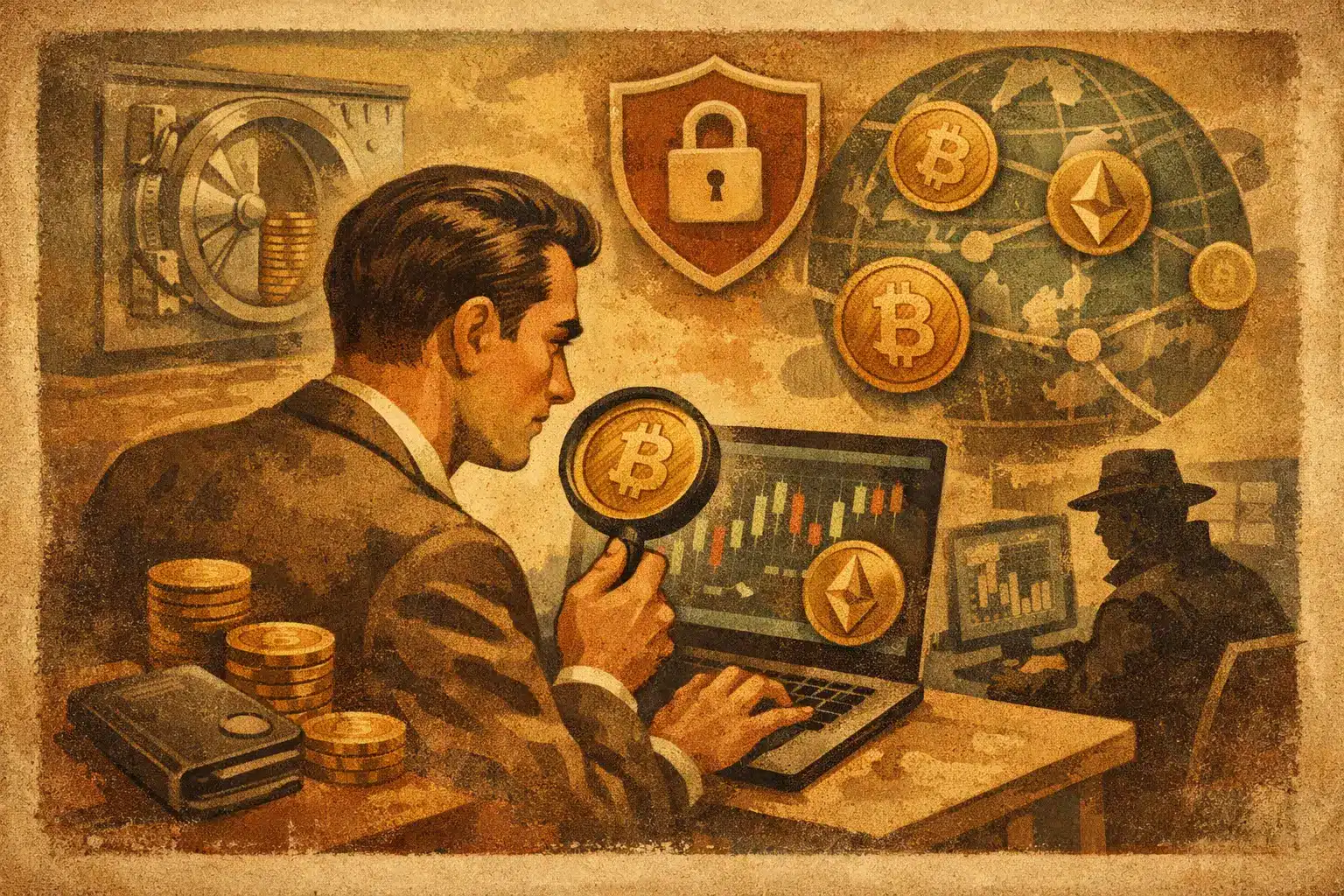
If you are new to crypto, the first time you open an exchange can feel like walking into a dealing room with all the labels rubbed off. Prices flash, buttons compete for attention, and one wrong click can feel expensive. The good news is that learning how to use crypto exchanges is much simpler when you ignore the trader noise and focus on the few tasks that actually matter.
For most beginners, a crypto exchange is just a place to do three things: open an account, buy a small amount of cryptocurrency, and move it somewhere safe if needed. You do not need to understand every chart, token, or menu option. You need a calm process, a basic safety routine, and the confidence to take one step at a time.
What a crypto exchange actually does
A crypto exchange is an online platform where you can buy, sell, and sometimes store digital assets such as Bitcoin or Ethereum. Think of it as a marketplace with an attached account. You add money from your bank, choose the asset you want, and place an order.
Some exchanges are built for everyday users and keep the process fairly simple. Others are designed for active traders and can look far more complicated than they need to. If you are over 45 and just starting out, the best exchange is rarely the one with the most features. It is usually the one that feels clear, well-established, and easy to navigate without pressure.
How to use crypto exchanges without getting overwhelmed
The simplest way to approach an exchange is to treat it like online banking with a few extra checks. You are not there to explore everything. You are there to complete a small number of tasks safely.
Start by choosing a well-known exchange that operates in your country and supports bank transfers in pounds or euros, depending on where you live. Once you create your account, the platform will usually ask you to verify your identity. That can feel intrusive at first, but it is normal. Most reputable exchanges require photo identification and sometimes proof of address before you can use all features.
After your identity is approved, you can set up security. This is one of the most important parts of the whole process. Use a strong unique password and switch on two-factor authentication. That means the exchange will ask for a second code, usually from an authentication app, when you log in or withdraw funds. It adds a small extra step, but it is well worth it.
Then comes funding the account. Many beginners prefer a bank transfer because it is familiar and often cheaper than using a debit card. Once the money arrives, you can place your first purchase.
Your first buy: keep it boring
Most mistakes happen when people rush. For your first transaction, choose a small amount and use the simplest order type available, usually called a market order or an instant buy option. That means you are buying at the current available price.
Could you save a bit by learning advanced order types? Possibly. But in the early days, simplicity matters more than shaving off tiny differences. Your goal is to understand the process, not to behave like a day trader.
Before you press confirm, check three things: the asset name, the amount you are buying, and the fees. Then complete the purchase and take a screenshot or make a note for your records. Keeping a simple paper trail from day one is a sensible habit.
Exchange wallets versus your own wallet
One point often causes confusion. When you buy crypto on an exchange, the asset usually appears in a wallet linked to your exchange account. That is convenient, but it is not quite the same as holding it in a wallet you control yourself.
For very small amounts, some beginners leave funds on the exchange while they are learning. For larger amounts or longer-term holding, many people prefer to move their crypto to a personal wallet, especially a hardware wallet. This gives you more control, but it also gives you more responsibility. If you lose your recovery phrase, there is no customer service team who can simply reset it for you.
So which is better? It depends on your confidence level, the amount involved, and whether you are ready to manage your own storage safely. There is nothing wrong with learning in stages.
Fees, spreads and the hidden cost of convenience
Crypto exchanges do not all charge in the same way. Some show a clear fee for buying and selling. Others make money through the spread, which is the difference between the buying and selling price. Instant buy features are often easy to use, but they can cost more.
That does not mean you should avoid them completely. It means you should know what you are paying for. If a simple buying screen helps you avoid mistakes, that may be worth a slightly higher fee in the beginning. Later, once you are more comfortable, you can compare the basic and advanced sections of the exchange and see whether lower-cost options make sense for you.
Sending crypto: where beginners need to slow down
Buying on an exchange is one thing. Sending crypto to another wallet is where care becomes essential. Wallet addresses are long strings of letters and numbers, and if you send funds to the wrong address or wrong network, recovery may be impossible.
Always copy and paste the address rather than typing it manually. Check the first few characters and the last few characters before sending. If the amount is meaningful, send a small test amount first.
You also need to make sure the coin and the network match. For example, not every version of a token works on every network. This is where many beginners get caught out. If something on the screen does not make sense, pause. Crypto rewards patience more than speed.
Common mistakes to avoid on crypto exchanges
The biggest beginner mistake is doing too much too soon. An exchange account can offer staking, futures, margin, lending, borrowing, earn programmes, and dozens of coins you have never heard of. None of that is necessary when you are learning the basics.
Another common mistake is chasing a coin because it is rising quickly. That is not a strategy. It is emotion wearing a maths costume. Beginners are usually far better served by sticking to a small number of established assets and learning how the system works before branching out.
Scams are another issue. If someone contacts you privately about a crypto opportunity, asks you to move funds urgently, or promises guaranteed returns, step away. Real exchanges do not need strangers in messaging apps to convince you to act. Keep all activity inside the official website or app, and double-check that you are using the genuine platform.
A simple routine you can follow
If you want a calm way to learn how to use crypto exchanges, keep to a simple routine. Choose one reputable exchange. Verify your identity. Turn on security. Deposit a small amount. Buy a small amount of one established asset. Learn how to view your balance, transaction history, and settings. Only then look at withdrawals or personal wallets.
That approach may sound slow, but slow is often what builds confidence. Most people do not need more complexity. They need fewer moving parts and a process they can repeat without stress.
When an exchange is the wrong tool
Exchanges are useful, but they are not the answer to every crypto question. If your real goal is long-term wealth preservation, inheritance planning, or understanding how storage works for family members, then buying on an exchange is only the first layer. At that stage, education matters more than another app feature.
That is especially true for older adults who want to avoid costly mistakes and build confidence properly. Learning from a trusted teacher can save a great deal of confusion. If you want a plain-English starting point, Simply Learn Crypto offers a free first lesson that helps beginners understand the basics without the usual jargon.
If you already know you prefer structured support, the 12-Lesson Beginner Bundle gives you a more guided route through the essentials. And if you want ongoing help as your confidence grows, the full academy is designed to make crypto easier to understand step by step.
Featured image description
An older adult sitting at a table with a laptop and notebook, calmly learning about crypto in a bright, comfortable home setting.
The main thing to remember is this: a crypto exchange is just a tool. Used carefully, it can help you buy your first digital assets without drama. Used carelessly, it can become confusing very quickly. Keep your process simple, stay sceptical of hype, and let confidence build through small, sensible steps.
