

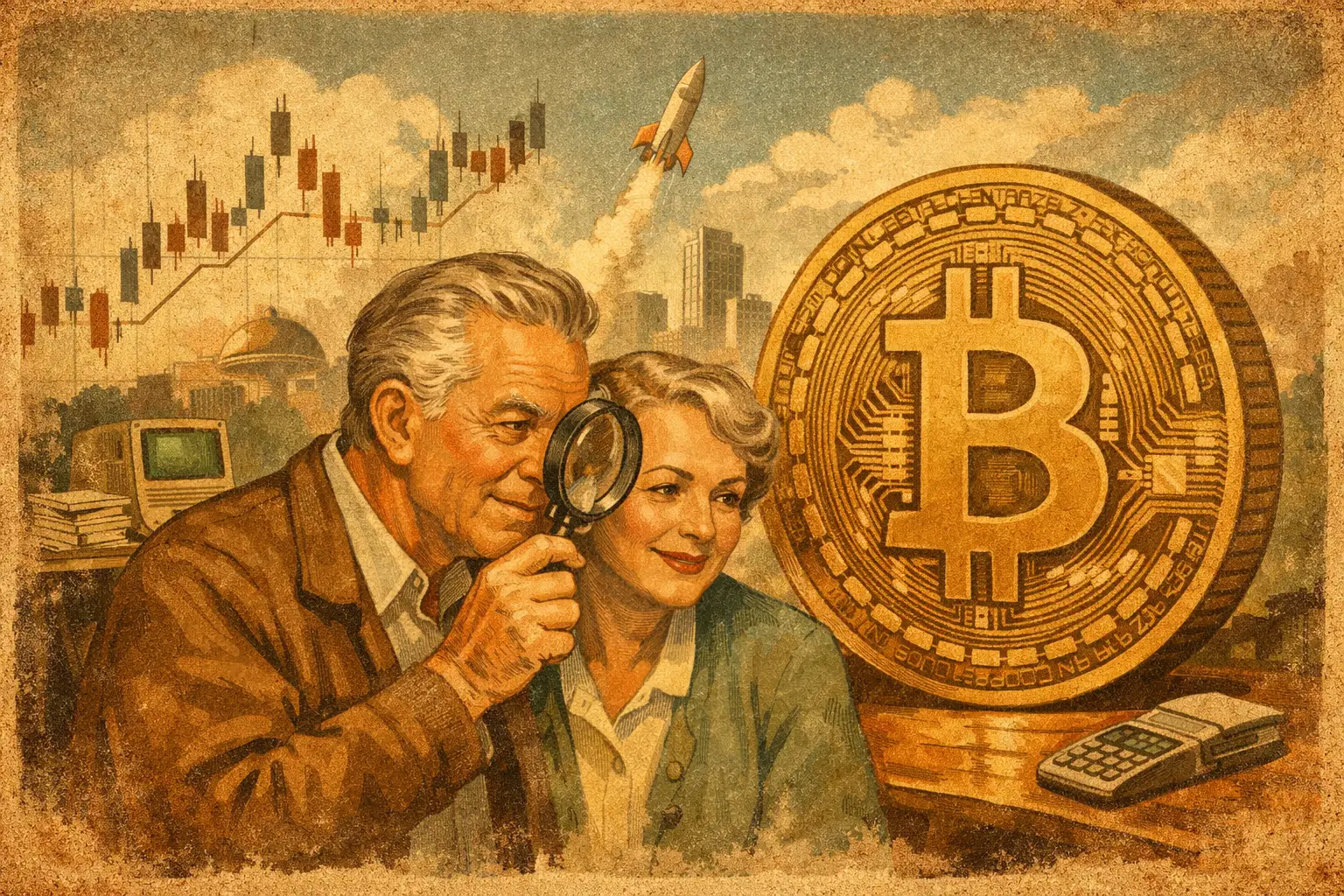
If you have ever read about Bitcoin and felt that everyone else got the memo years ago, you are not alone. Many people over 50 are coming to it now for very sensible reasons – inflation, concerns about savings, curiosity about digital money, or simply the feeling that finance is changing and they do not want to be left behind.
The good news is this: you do not need to be a tech expert, a day trader, or someone who spends all day on your mobile to understand Bitcoin. You only need a clear explanation, a cautious mindset, and a sensible first step.
What is Bitcoin, in plain English?
Bitcoin is a type of digital money. Unlike pounds or euros, it is not issued by a central bank or controlled by one government. It runs on a network of computers around the world, and every transaction is recorded on a public digital ledger called the blockchain.
That sounds more complicated than it is. A simpler way to think about Bitcoin is this: it is money designed for the internet age. You can own it, send it, receive it, and store it digitally. No bank branch is required.
What makes Bitcoin different is that there will only ever be a limited number of coins. That fixed supply is one reason many people see it as a hedge against inflation or as a long-term store of value. Others simply see it as a new asset class worth understanding, even if they only invest a small amount.
Why bitcoin for beginners over 50 is different
If you are in your 50s, 60s, or beyond, your questions are usually more practical than the average crypto headline suggests. You are less likely to ask how to trade all day and more likely to ask whether this is safe, whether it is too late, and whether it has a genuine role in protecting wealth.
Those are the right questions.
For this age group, Bitcoin is rarely about chasing excitement. It is more often about staying informed, making measured decisions, and understanding whether digital assets deserve a small place in a broader financial picture. That may mean buying a little and holding it for years. It may mean learning enough to decide it is not for you. Both outcomes are perfectly reasonable.
The mistake is not ignorance. The mistake is letting confusion force the decision.
Why people over 50 are paying attention now
There are a few reasons Bitcoin keeps coming up in conversations with pre-retirees and retirees. The first is inflation. When the cost of living rises and cash savings lose purchasing power, people naturally start looking at alternatives.
The second is trust. Some people are uneasy about the traditional financial system, especially after years of economic shocks, low interest rates, and policy changes that affect savings. Bitcoin appeals to those who like the idea of an asset outside the usual banking structure.
The third is relevance. Digital finance is no longer a niche topic. Whether you end up buying Bitcoin or not, understanding the basics is becoming part of modern financial literacy.
That said, none of this means Bitcoin is risk-free. It is not. Its price can rise sharply and fall just as quickly. That is why education matters far more than hype.
Is Bitcoin safe?
Bitcoin itself is not a scam. It is a legitimate digital asset with a long track record, a global user base, and increasing recognition. But the space around it can be risky, especially for beginners.
Most problems do not come from Bitcoin magically disappearing. They come from human mistakes – sending funds to the wrong place, falling for fake investment schemes, clicking on scam messages, or storing coins carelessly.
That is why safety in crypto is less about luck and more about habits. A careful beginner who moves slowly can avoid many of the common traps. Someone who rushes in, trusts strangers, or follows online hype is far more exposed.
If you remember one principle, let it be this: never invest in anything you do not understand, and never act under pressure.
How to start with Bitcoin without feeling overwhelmed
The easiest way to begin is not to buy first. It is to learn first.
Start by understanding three basic ideas: what Bitcoin is, where you buy it, and how you store it. Once those are clear, the process becomes far less intimidating.
You will usually buy Bitcoin through a regulated crypto exchange. This is an online platform where you can open an account, verify your identity, and purchase a small amount using your bank card or bank transfer. After that, you can leave it on the exchange for convenience or move it to a personal wallet for more control.
A wallet does not hold physical coins. It holds the digital keys that prove your ownership. Some wallets are connected to the internet and are easier for beginners. Others, often called hardware wallets, offer stronger security for larger amounts because they store your access offline.
For many older beginners, the sensible path is to start small, practise with a modest amount, and learn the mechanics before committing more.
Bitcoin for beginners over 50: what to do first
A calm first step matters more than a clever one. If you are just beginning, treat Bitcoin like any new financial subject. Learn the basics, test the process, and build confidence gradually.
First, decide why you are interested. Is it curiosity? Long-term saving? Diversification? A hedge against inflation? Your reason will shape your approach.
Next, choose a small amount you could afford to lose without affecting your lifestyle. That might be £50, £100, or another amount that feels manageable. This is not about getting rich quickly. It is about learning safely.
Then, set up your account carefully. Use strong passwords, enable two-factor authentication, and write down your recovery details securely. Do not store sensitive information loosely on your laptop or in your email inbox.
Finally, give yourself permission to go slowly. There is no prize for rushing.
Common mistakes beginners should avoid
One of the biggest mistakes is buying because the price is rising and everyone seems excited. That often leads to emotional decisions. A better approach is to buy only after you understand what you own and why you own it.
Another mistake is investing too much too soon. Bitcoin can be a useful part of a portfolio, but for most beginners over 50, it makes sense as a small, measured allocation rather than an all-in move.
Scams are another major concern. Be deeply sceptical of anyone promising guaranteed returns, secret opportunities, or urgent deadlines. If a stranger contacts you about crypto, that is already a warning sign.
Then there is the storage issue. Many people ignore wallet security until after something goes wrong. Taking time to learn safe storage early is dull, perhaps, but it is far cheaper than learning the hard way.
Does Bitcoin belong in retirement planning?
It depends on your financial position, your risk tolerance, and your goals. For some people, Bitcoin is simply too volatile to play any meaningful role in retirement planning. For others, a small allocation may make sense as part of a diversified strategy.
The key word here is small. Bitcoin is not a substitute for cash reserves, pensions, or sensible long-term planning. It is a high-risk asset with high potential upside and sharp downside swings. That trade-off needs to be faced honestly.
For many people over 50, the best use of Bitcoin is not as a dramatic bet, but as a limited position that reflects curiosity, conviction, or a wish to gain exposure to a changing financial landscape.
Learning with support can make all the difference
A lot of capable adults stay stuck on Bitcoin because they try to piece everything together from random videos, headlines, and conflicting advice. That creates more noise than clarity.
This is where guided education helps. When someone explains Bitcoin in plain English, walks you through wallets and safety, and answers the questions you may feel embarrassed to ask, the subject becomes much more manageable.
That is exactly why Simply Learn Crypto exists – to help adults 45 and over understand digital assets without jargon, pressure, or technical overwhelm. For many beginners, especially those who value reassurance and structure, that sort of support can save a great deal of time and stress.
If you are over 50 and curious about Bitcoin, you do not need to become an expert overnight. You just need enough understanding to make a calm, informed decision that suits your life. Start there, and you will already be ahead of most people who are still pretending they understand it.
