

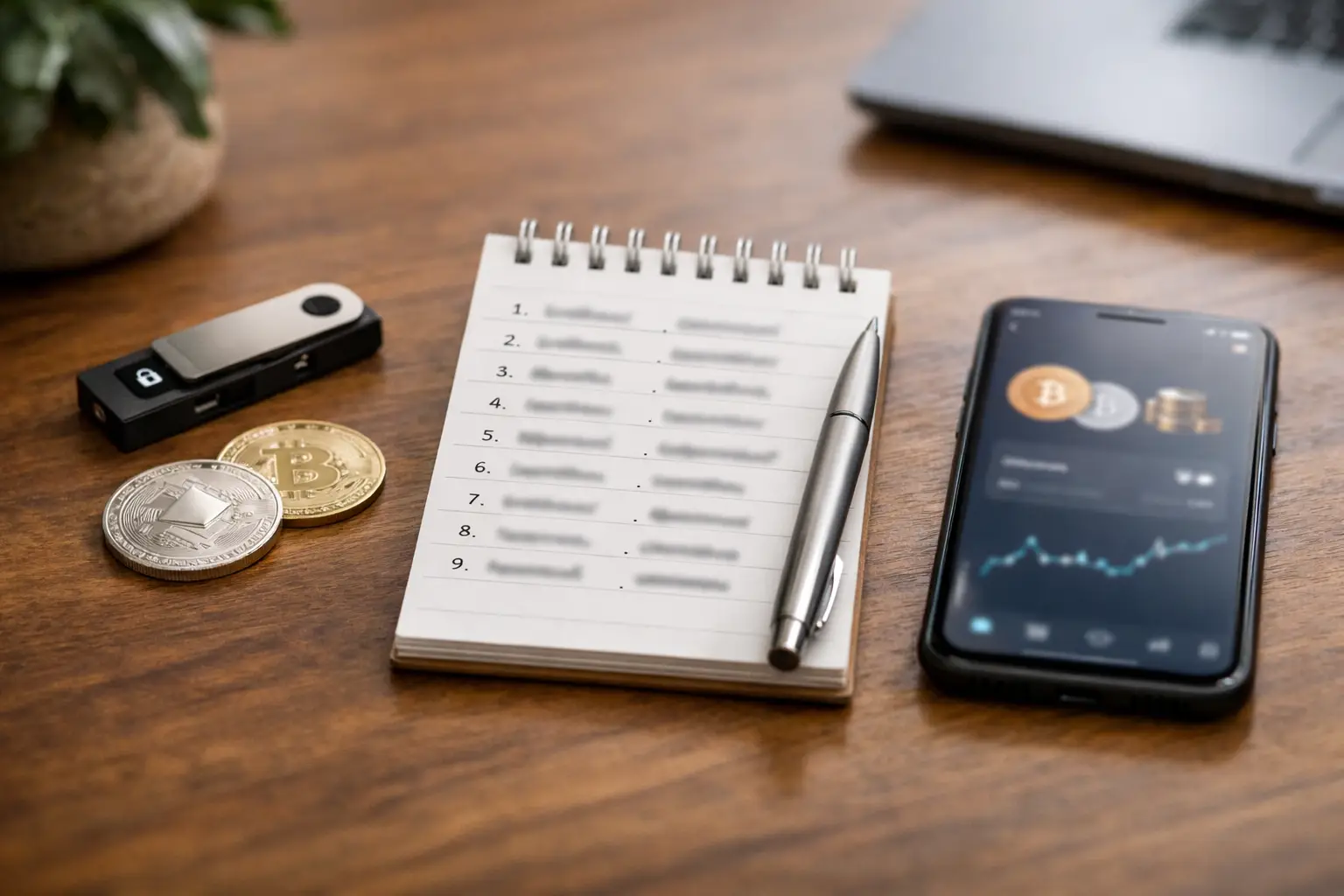
A wallet backup phrase is the one part of crypto ownership that deserves your full attention before you put meaningful money into a private wallet. It may look like an ordinary list of words, but those words can restore access to your Bitcoin or other crypto if your mobile phone is lost, your hardware wallet breaks, or you forget a password. This wallet backup phrase explained guide will help you understand it calmly, without technical language or unnecessary fear.
What is a wallet backup phrase?
A wallet backup phrase is usually a list of 12 or 24 simple words generated when you create a non-custodial crypto wallet. You may also hear it called a recovery phrase, seed phrase, secret recovery phrase or mnemonic phrase. Different wallet providers use different names, but they mean broadly the same thing.
The phrase is not a password that merely opens an app. It is the master backup for the wallet. Anyone who has the full phrase can recreate your wallet on another compatible device and move the crypto inside it. They do not need your mobile phone, your email address or your usual PIN.
That can sound alarming, but it also gives you a valuable form of control. If you hold the backup phrase safely, a damaged device does not have to mean lost funds. Your wallet can be restored elsewhere. The responsibility is greater, however: there is no bank manager or customer service team that can retrieve a phrase you have lost.
Why the phrase matters more than the device
Many beginners assume their crypto lives inside their mobile phone or hardware wallet. In reality, the device is better thought of as a tool for accessing and approving transactions. The backup phrase is what allows the wallet and its private keys to be recreated.
Imagine keeping the only key to a locked filing cabinet. The cabinet might be replaced, but without the key, the documents remain out of reach. Your wallet backup phrase plays a similar role. It is the recovery key to your digital assets.
This is particularly relevant for long-term holders and people thinking about family or legacy planning. A mobile phone can be dropped in the sea on holiday. A laptop can fail. A hardware wallet can be misplaced during a house move. A carefully stored recovery phrase means the loss of equipment is inconvenient rather than catastrophic.
What a backup phrase does not do
A backup phrase cannot reverse a transaction you sent by mistake. Crypto payments are generally irreversible once confirmed, so you still need to check addresses carefully.
It also does not protect you if you willingly give it to a scammer. Fraudsters often create a sense of urgency, claiming your wallet is compromised and asking you to ‘verify’ or ‘secure’ it by entering your phrase on a website. That request is the warning sign. A legitimate wallet provider will not ask you to reveal your backup phrase.
Nor should you type it into a search engine, send it by WhatsApp, photograph it, or store it in an email draft. Convenience can feel harmless until a device, account or cloud storage service is compromised.
How to write down your phrase safely
When a new wallet shows you a backup phrase, slow down. Do not create a wallet while distracted, rushed or on a call with someone claiming to be support staff. Write each word down in the exact order shown and check the spelling carefully.
Paper is often the simplest starting point. Use clear handwriting, keep the phrase out of sight, and avoid labelling it with words such as ‘Bitcoin wallet’ or ‘crypto seed phrase’. If somebody finds it, you do not want to make their job easier.
For a larger long-term holding, some people choose a purpose-made metal backup because it is more resistant to fire and water than paper. This can be sensible, but it is not automatically safer. A metal backup still has to be stored in a private location, and buying specialist equipment should never replace good habits.
A practical approach is to make two handwritten copies and store them separately in secure places that only you can access. The right arrangement depends on your home, your family circumstances and the value involved. Keeping both copies in the same drawer defeats much of the purpose of having a backup.
Common mistakes to avoid
The biggest mistake is treating a backup phrase as though it were an ordinary password. Passwords can often be reset. A wallet backup phrase cannot.
Avoid these four habits in particular:
- Saving the words in a photo, screenshot, notes app or cloud document.
- Sharing the phrase with a friend, relative, online ‘helper’ or supposed support agent.
- Keeping only one copy in a place vulnerable to fire, flooding or theft.
- Trying to make the phrase more memorable by changing the word order or adding your own words.
Another well-meant idea is splitting the phrase between several people or several locations. This may sound safer, but it can create confusion. If one section is lost, copied incorrectly or inaccessible when needed, you may be unable to recover the wallet. For beginners, simple and accurate storage is usually safer than an elaborate system you may forget later.
Should you test the backup phrase?
A backup that has never been checked can create a nasty surprise years later. Perhaps a word was written incorrectly, or the words were copied in the wrong order. Yet testing must be done carefully.
The safest option is to learn the restoration process using a new empty practice wallet, ideally with guidance from someone you trust. Do not casually enter the phrase for a wallet holding valuable funds into unfamiliar software or websites. A genuine wallet may ask for the phrase during an intentional recovery process, but a pop-up, email or unexpected request should be treated as suspicious.
If you use a hardware wallet, follow its official on-device instructions when setting up and recovering. The phrase should normally be entered on the device itself, not into a website on your computer. Small details like this are where many scams succeed.
Keep the phrase separate from everyday wallet access
Most wallets also use a PIN, password or biometric check such as a fingerprint. These are useful day-to-day protections, but they are not the same as the backup phrase.
It is usually sensible to keep your PIN memorable but private, and your backup phrase stored securely elsewhere. If someone sees your PIN, it should not give them access to your master recovery words. If they find your written phrase, they should not also find an obvious note identifying the wallet app or device it belongs to.
You may hear experienced users mention an extra passphrase, sometimes called a 25th word. This can add another layer of protection, but it also adds another thing to remember and preserve. If you forget it, the standard 12 or 24 words may not restore the wallet you expect. For a first wallet, learning the basics well is often the wiser choice.
Planning for a partner or family member
A recovery phrase raises an uncomfortable but worthwhile question: if you were unable to access your wallet, would somebody you trust know that crypto exists and understand what to do?
You do not need to hand over the phrase now. But you can prepare clear instructions about where important documents are kept, who should be contacted, and how access can be obtained in the right circumstances. Consider updating this plan after a house move, bereavement, divorce or major change in your finances.
The aim is not to make crypto complicated. It is to ensure that something intended to support your future does not become inaccessible to the people you care about. Calm preparation is far more effective than relying on memory alone.
A quiet rule worth remembering
Your wallet backup phrase is private for life. No investment opportunity, wallet upgrade, tax office message, giveaway or urgent security alert changes that rule. If anyone asks for it, assume they are trying to take your crypto until you can prove otherwise through a trusted, independent route.
Take your time before setting up a wallet, write the phrase accurately, store it thoughtfully, and avoid discussing its location. That one steady habit can make long-term crypto ownership feel much less daunting.
This article is shared for entertainment and educational purposes only. It is not financial advice. Crypto investments involve risk, and past performance is not a guide to future results. Always do your own research or speak to a qualified financial adviser before making any investment decisions.
