

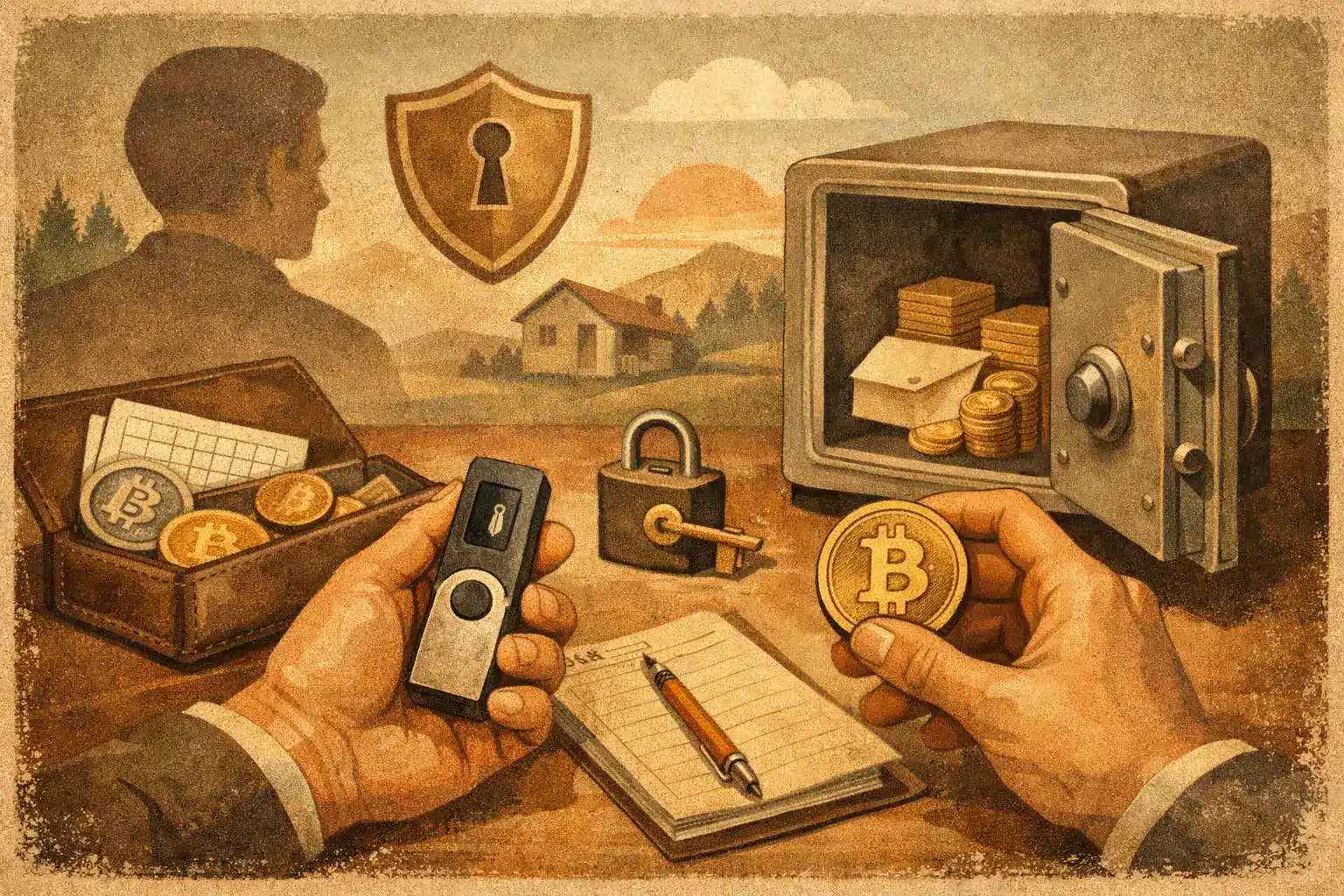
If you have ever bought a little Bitcoin and then paused at the words wallet, seed phrase or private key, you are not alone. For many people, the first real hurdle is not buying crypto at all. It is understanding how to keep it safe. This self custody beginner guide is here to make that part feel calmer, clearer and far less technical.
Self-custody simply means you hold the keys to your own crypto rather than leaving it with an exchange or platform. That is the appeal. You are not relying on a company to look after your assets for you. But with that control comes responsibility, and that is why beginners need a steady, sensible explanation rather than crypto jargon.
What self-custody actually means
When people say, not your keys, not your coins, they are talking about control. If your crypto stays on an exchange, the exchange is effectively holding it on your behalf. You may see the balance in your account, but the platform controls the underlying keys.
With self-custody, those keys are under your control. In practical terms, that usually means setting up a wallet that gives you access to a recovery phrase, sometimes called a seed phrase. That phrase is the master backup to your wallet. If your device is lost, damaged or replaced, the recovery phrase is what lets you restore access.
This is the part that often makes newcomers nervous. That is understandable. Self-custody is empowering, but it is not casual. If you lose your recovery phrase, or if a scammer gets hold of it, there is rarely a customer service line that can fix the problem for you.
Why some beginners choose self-custody
The main reason is independence. Many people over 45 are not interested in trading all day. They are thinking more about long-term holding, preserving wealth and keeping some control over their financial future. Self-custody can support that mindset because it removes one layer of dependence on third-party platforms.
It can also reduce certain risks. Exchanges can freeze withdrawals, suffer hacks or run into financial trouble. Self-custody does not remove risk altogether, but it changes the type of risk. Instead of trusting a company to protect your assets, you are taking responsibility for security yourself.
That trade-off matters. Some people are comfortable with it straight away. Others prefer to learn slowly and keep only a modest amount in self-custody at first. That is often the wiser approach.
If you are still building your understanding of Bitcoin and wallets, it may help to start with the Free First Lesson: https://simplylearncrypto.com/free-lesson/
Self custody beginner guide to the main wallet types
A wallet does not actually store your crypto in the way a leather wallet stores cash. It stores the information needed to access your crypto on the blockchain. For beginners, there are two broad categories worth knowing.
Hot wallets
A hot wallet is connected to the internet through your mobile phone, tablet or computer. These wallets are often easier to set up and use, which makes them popular with beginners. They are useful for learning, for smaller amounts and for getting comfortable with sending and receiving crypto.
The drawback is convenience usually comes with more exposure. Because the wallet is on an internet-connected device, there is a greater security risk than with an offline option.
Cold wallets
A cold wallet, often called a hardware wallet, keeps your keys offline on a separate device. Many long-term holders prefer this because it reduces exposure to online threats. For someone thinking carefully about retirement, inheritance or long-term storage, a hardware wallet may feel more suitable.
The trade-off is that setup can feel less intuitive at first. You need to buy the device, follow instructions carefully and store the recovery phrase safely. It is not difficult once you understand the process, but it does ask for patience.
The recovery phrase is the part that matters most
If you remember one thing from this self custody beginner guide, let it be this: your recovery phrase is everything.
When you set up a self-custody wallet, you are usually shown a series of words. Those words are the backup to your wallet. Anyone who has them can usually access your crypto. That is why you should never store them casually in your email, cloud storage, notes app or a photograph on your mobile phone.
Write them down carefully by hand and keep them somewhere private and secure. Some people keep a second copy in a separate secure location in case of fire or flood. The right setup depends on your circumstances, but the principle is the same. Your phrase must be protected from both loss and theft.
No legitimate support team, wallet provider or investment adviser will ever need your recovery phrase. If anyone asks for it, that is a red flag.
Common mistakes beginners make
The most common mistake is rushing. People often buy crypto first and only think about storage afterwards. A calmer approach is to understand the wallet before moving any funds.
Another mistake is testing with too much money. It is far better to send a small amount first, confirm it arrives safely and only then move larger amounts. That simple habit can prevent expensive errors.
Scams are another major issue. Fraudsters often target beginners with fake wallet apps, fake support messages and urgent warnings designed to create panic. If something feels rushed, secretive or unusually complicated, stop. Good security usually feels boring and methodical.
A further issue is failing to plan for loved ones. If you hold assets in self-custody and no one knows they exist or how to access them safely, that can create difficulties later. You do not need to hand over your recovery phrase casually, but you should think about legacy planning in a sensible way.
How to start with self-custody without feeling overwhelmed
Begin small. That is the best advice for most people. Choose a modest amount of crypto to practise with and take your time learning the wallet process.
First, decide whether you want to begin with a hot wallet for ease or a hardware wallet for stronger long-term storage. Then set it up in a quiet environment where you will not be interrupted. Carefully write down the recovery phrase exactly as shown and double-check every word.
Next, send a very small test transaction. Watch it arrive. Then practise checking your balance and, if you want, sending a small amount back. This builds confidence through experience rather than theory.
Once you understand the basic flow, you can decide whether self-custody suits all of your holdings, some of them, or only the amount you plan to keep for the longer term. It does not have to be all or nothing.
If you want a gentler explanation before taking that step, you can download your Free Bitcoin Guide here: https://simplylearncrypto.com/free-guide/
Is self-custody right for everyone?
Not always. That is worth saying clearly.
Some people like the idea of full control but know they are not confident with passwords, backups or careful record-keeping. In that case, jumping straight into self-custody with a large sum may not be the best move. There is no prize for doing everything at once.
Others are highly organised and actually feel more comfortable taking direct responsibility rather than trusting a platform. For them, self-custody can be a very sensible part of a long-term approach.
It depends on your confidence, your habits and how much time you are willing to spend learning. The goal is not to impress anyone. The goal is to reduce avoidable risk while keeping your decisions calm and informed.
A steady approach builds real confidence
The good news is that self-custody is learnable. You do not need to be technical. You do need to be careful, patient and willing to follow steps properly. That suits many mature learners far better than the noisy, fast-moving side of crypto culture.
Done well, self-custody can give you a stronger sense of ownership and a clearer understanding of how digital assets really work. Done carelessly, it can create stress. So give yourself permission to go slowly, ask simple questions and practise with small amounts until the process feels familiar.
If you’d like to take the next gentle step, you can start with your Free First Lesson here: https://simplylearncrypto.com/free-lesson/
“This article is shared for entertainment and educational purposes only. It is not financial advice. Crypto investments involve risk, and past performance is not a guide to future results. Always do your own research or speak to a qualified financial advisor before making any investment decisions.”
