

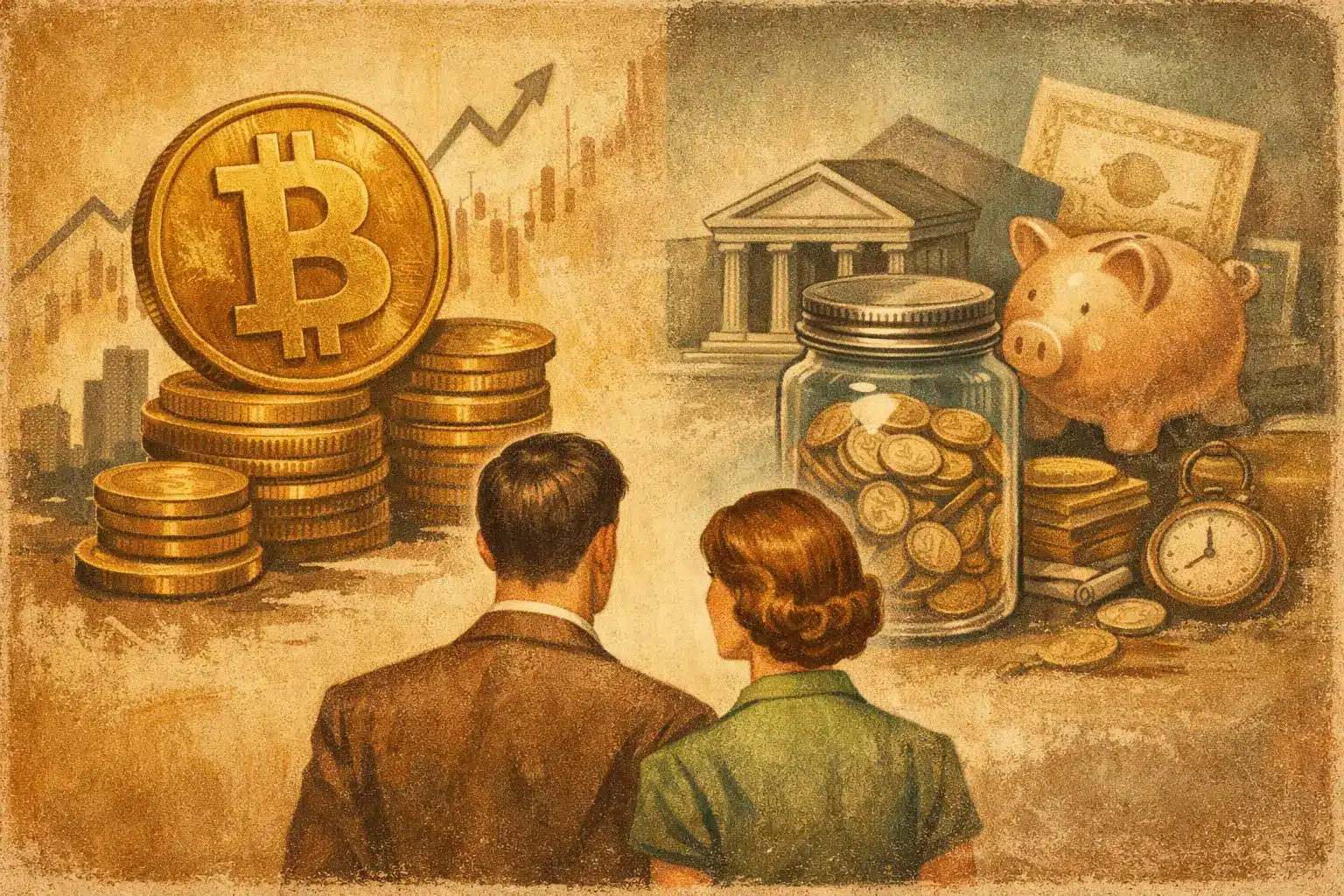
A lot of people over 45 ask the same quiet question when they first look at crypto: should I keep doing what feels familiar, or am I being left behind? That is really what bitcoin vs savings account comes down to. It is not just about returns. It is about safety, access, inflation, and how much uncertainty you are comfortable with.
If you have spent years building savings carefully, this matters. A savings account feels steady and understandable. Bitcoin can feel like the opposite at first glance. But once you strip away the noise, both are simply different ways of storing value, and both come with strengths and weaknesses.
Bitcoin vs savings account: the basic difference
A savings account is money held with a bank. It is designed for stability, easy access, and modest interest. You know what a pound is worth when you log in. The balance may creep up slowly, but it usually does not surprise you.
Bitcoin is a digital asset that is not controlled by one bank or government. Its price moves up and down, sometimes sharply. It is often seen as a long-term store of value by people who want an alternative to traditional money, especially when they are concerned about inflation or the wider financial system.
So the real difference is simple. A savings account prioritises stability. Bitcoin prioritises scarcity and long-term upside potential, but with much more short-term volatility.
What a savings account does well
For day-to-day peace of mind, savings accounts still do an important job. If you need access to cash for bills, emergencies, holidays, or helping family, a savings account is practical. It is familiar, easy to manage, and usually protected within banking rules and deposit schemes, depending on where you live and bank.
That kind of predictability matters, especially if you are retired or close to retirement. You do not want your emergency fund swinging wildly in value. You want to know it is there when the boiler breaks or the car needs repairs.
A savings account can also help people sleep at night. There is real value in that. Finance is not only maths. It is also emotion, confidence, and your ability to stick with a plan.
The downside is that savings accounts often struggle to keep pace with inflation over the long term. If prices rise faster than your interest rate, your money may be growing on paper while losing spending power in real life.
What Bitcoin does well
Bitcoin appeals to people for a different reason. It was created with a fixed supply, which means there will only ever be a limited number of coins. That is very different from regular currencies, which can be increased by central banks over time.
For some people, that scarcity is the whole point. They see Bitcoin as a hedge against money losing value. They are willing to tolerate ups and downs because they believe the long-term direction could be positive over many years, not weeks.
Bitcoin also gives you a form of ownership that sits outside the traditional banking system. That does not mean it replaces banks in every situation, but it does mean you can hold part of your wealth in something that is not simply cash in an account.
For beginners, this can sound more complicated than it really is. If you want a calmer introduction, you can start with the Free First Lesson and get the basics explained in plain English.
The biggest trade-off: stability vs growth potential
This is where bitcoin vs savings account becomes a personal decision rather than a simple winner-and-loser comparison.
A savings account is unlikely to multiply your wealth. Its role is protection, liquidity, and stability. Bitcoin, on the other hand, has historically offered much higher growth potential, but it comes with much bigger swings and no guarantees.
You may look at Bitcoin and think, what if it falls just after I buy it? That is a sensible concern. Bitcoin can drop significantly in short periods. Anyone considering it needs to be emotionally and financially prepared for that.
You may also look at your savings account and think, what if my money slowly loses value while I do nothing? That concern is sensible too. Inflation is quiet, but over time it can do real damage.
So the question is not which is perfect. It is which job you want the money to do.
Safety means different things
When people say they want something safe, they often mean different things without realising it.
A savings account feels safe because the value does not jump around. You can see your balance and understand it immediately. But that kind of safety does not protect you from inflation risk.
Bitcoin may feel unsafe because the price moves so much. Yet some people see it as protection from a different kind of risk – the risk that traditional money loses value over time or that the financial system changes in ways that hurt savers.
There is also practical safety to think about. A bank account is usually straightforward to access if you forget a password or need support. With Bitcoin, personal responsibility is much higher. If you do not understand wallets, security, and common scams, mistakes can be costly.
That is why education matters before action. If you are still working out how Bitcoin storage works, it may help to download your Free Bitcoin Guide and learn the basics without pressure.
Should retirees keep money in Bitcoin?
For most retirees, the honest answer is not all or nothing. Bitcoin is generally not the place for money you need next month or next year for living costs. That is what cash savings are for.
Where Bitcoin may fit is as a smaller, carefully considered part of a wider plan. Some people choose to hold a modest amount alongside cash and other assets because they want exposure to potential long-term growth without risking essential savings.
That approach tends to suit beginners better than dramatic moves. It lowers the pressure. You can learn, start small, and decide over time whether it deserves a place in your financial life.
If you are near retirement, sequence matters. A sharp market drop hurts more when you need income soon. If you are investing for children, grandchildren, or a longer legacy timeline, your tolerance may be different.
Questions worth asking yourself
Before choosing between Bitcoin and a savings account, it helps to ask a few plain questions. What is this money for? When might I need it? How would I feel if its value fell by 20 or 30 per cent? Am I looking for stability, growth, or a bit of both?
These questions matter more than headlines. They help you match the tool to the purpose.
If the money is your emergency fund, a savings account is usually the more sensible home. If the money is long-term capital that you can afford to leave alone and you want some protection against inflation or currency weakness, Bitcoin may be worth learning about.
A sensible middle ground
Often, the most balanced answer to bitcoin vs savings account is not choosing one and rejecting the other. It is understanding that they serve different roles.
A savings account can cover short-term needs, emergency expenses, and peace of mind. Bitcoin can sit in a separate bucket for long-term potential, provided you understand the risks and keep position sizes sensible.
That does not sound exciting, but boring is often underrated in personal finance. Calm, measured decisions usually age better than emotional ones.
For people new to this space, the goal should not be to become a crypto expert overnight. It should be to build enough understanding that you can make your own decisions confidently, without panic and without being pushed around by hype.
If you would like to take the next gentle step, you can start with your Free First Lesson here: https://simplylearncrypto.com/free-lesson/
This article is shared for entertainment and educational purposes only. It is not financial advice. Crypto investments involve risk, and past performance is not a guide to future results. Always do your own research or speak to a qualified financial adviser before making any investment decisions.
