

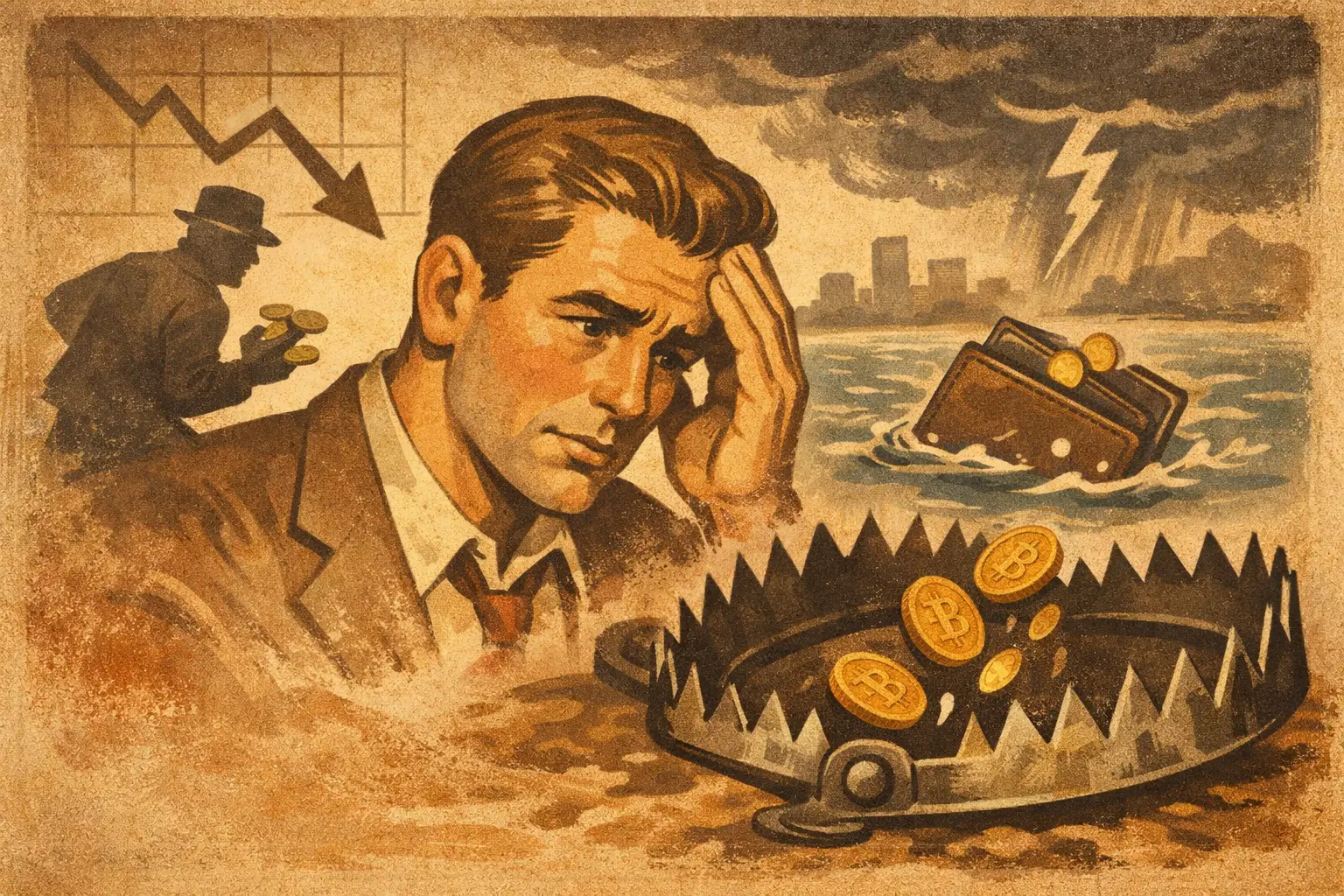
The hard truth is that most people do not lose crypto because of a market crash. They lose it through simple mistakes – sending it to the wrong place, trusting the wrong person, forgetting a password, or storing key details badly. If you are wondering how to avoid losing crypto, the good news is that the biggest risks are often preventable with calm, basic habits.
For many beginners, especially those coming to crypto later in life, the fear is not really about Bitcoin or wallets. It is about making one irreversible error. That concern is sensible. Crypto gives you more control, but that also means more responsibility. Once you understand where losses usually happen, it becomes much easier to protect yourself.
Why people lose crypto in the first place
Crypto losses usually come from three places: human error, poor storage, and scams. Market ups and downs are one thing. Accidentally giving a fraudster access to your funds is another.
A common mistake is treating crypto like online banking. With a bank, there is often a customer service line, a reset button, or fraud support. With crypto, many transactions cannot be reversed. If you type the wrong wallet address, send the wrong coin to the wrong network, or hand over your recovery phrase, there may be no practical way to undo the damage.
That sounds severe, but it should not put you off. It should simply shape how you approach the space. Slow decisions, double-checking, and secure storage matter far more than trying to be clever.
How to avoid losing crypto when you are just starting
The safest approach for a beginner is not to do everything at once. You do not need five apps, advanced trading tools, and a complicated strategy. In fact, that usually creates more room for confusion.
Start small and keep your setup simple. Use one reputable exchange, one wallet if needed, and one notebook or storage method for your key information. The more moving parts you introduce, the easier it is to make mistakes.
It also helps to separate buying from storage. Many beginners buy crypto on an exchange and leave it there without understanding the trade-off. That can be fine for a small amount while you are learning, but over time you should understand the difference between an exchange account and a personal wallet. If your coins stay on an exchange, you rely on that company’s systems and policies. If you move them to your own wallet, you gain control but must take greater care with security.
Learn the one detail that matters most
If you remember only one thing, make it this: never share your recovery phrase.
Your recovery phrase, sometimes called a seed phrase, is the master key to your wallet. Anyone who has it can usually access your crypto. No legitimate support team, educator, exchange employee, or wallet provider should ever ask for it. If someone does, that is a red flag.
This is where many losses happen. People think they are verifying an account, fixing a wallet problem, or receiving help. In reality, they are handing over control. If you want to know how to avoid losing crypto, protecting this phrase is near the top of the list.
Write it down clearly and store it somewhere safe and private. Do not keep it casually in your phone notes, email drafts, or computer desktop files. Convenience is tempting, but digital shortcuts are often where security starts to weaken.
Be careful with exchanges, but do not fear them
Exchanges are often the easiest place for beginners to buy crypto, and there is nothing wrong with that. The key is to use them properly.
Choose a well-known platform with a solid reputation and turn on two-factor authentication straight away. Use a strong, unique password that you do not use anywhere else. If possible, avoid logging in on public Wi-Fi or shared devices.
You should also be wary of fake websites and fake apps. Scammers often create near-identical copies of genuine brands. Before logging in, check the website address carefully. Small spelling changes can be enough to fool people.
A useful habit is to bookmark the official site once you know it is correct and always access it from that bookmark. That reduces the chance of clicking a fake link from a search result, email, or advert.
Wallet safety is more about habits than technology
People often assume wallets are highly technical. In practice, the basics are quite manageable when explained properly.
A wallet does not physically hold your crypto in the way a leather wallet holds cash. It holds the keys that allow you to access and manage your assets on the blockchain. That is why wallet security matters so much.
If you use a hardware wallet, keep it somewhere safe, but remember that the device itself is not the most important part. Your recovery phrase is. If the device is lost or damaged, the phrase is what allows recovery. If the phrase is lost, the wallet may be gone for good.
This is why clear records matter. Not dozens of scraps of paper in different drawers. Not vague hints only you can understand. You need a storage method that is secure, readable, and sensible enough that you will not confuse yourself later.
Scams are designed to feel urgent and friendly
Most crypto scams do not begin with a dramatic warning. They begin with a message that sounds helpful, exclusive, or time-sensitive.
Someone may offer to “manage” your crypto. A stranger may promise guaranteed returns. A fake support agent may contact you first. A website may say you have won a bonus if you connect your wallet. In nearly every case, the aim is the same: get access to your money or your wallet permissions.
Older adults are sometimes targeted because scammers assume they are less familiar with the technology. That is exactly why a calm, sceptical mindset is so valuable. If something feels rushed, flattering, or oddly generous, pause. Real opportunities do not disappear because you took ten minutes to think.
If you want a simple rule, use this one: never act on crypto instructions sent privately by a stranger. Not in email, not on WhatsApp, not on Telegram, not on social media.
Test first, then move larger amounts
One of the most practical ways to avoid losing crypto is to send a small test transaction before moving a larger amount.
This may feel unnecessary, especially if you are confident you copied the address correctly. But confidence is not the same as certainty. A small test can confirm that the address, network, and wallet are all correct before you move a more meaningful sum.
Yes, this may cost a small fee. But that fee is often a cheap form of insurance compared with the cost of a mistake.
Keep your crypto life organised
Disorganisation causes more losses than people realise. If you cannot remember which exchange you used, where your wallet details are stored, or whether you enabled security features, that confusion can become expensive.
Keep a clear private record of what you own, where it is held, and what someone trusted would need to know if you were ever unable to manage it yourself. This is especially important for anyone thinking about retirement planning or passing assets on later.
That does not mean leaving sensitive details lying around. It means creating an orderly system. Good security and good organisation usually go hand in hand.
How to avoid losing crypto over the long term
Long-term safety is less about watching prices and more about reviewing your setup every so often. Check that your passwords are current, your backups are readable, your devices are updated, and your storage still makes sense.
Your life may change. You may move house, replace a laptop, change your phone number, or forget details that felt obvious a year ago. Crypto security is not a one-off task. It is a quiet maintenance habit.
For beginners over 45, this steady approach tends to work far better than trying to absorb every new trend in the market. You do not need to chase complexity. You need a system you trust and understand.
If learning the basics with a guide would help, Simply Learn Crypto is built for people who want plain English, patient support, and fewer costly mistakes.
The safest people in crypto are not always the most technical. They are usually the most careful. Go slowly, ask questions, and build habits that still make sense six months from now. That is how confidence grows – and how losses become far less likely.
